
Rankings are based on independently published quarter-mile tests currently included in the 0–60 Specs database. Vehicles without a qualifying published test in our database are not included.
Fastest Supercharged Cars in the Quarter Mile
Median Quarter Mile 13.00sec Average 13.23s
Qualifying Vehicles 83 1988–2025 model years
Average Trap Speed 107.9mph Highest 135.0 mph · Mosler MT900
01 /
Top 10 Fastest by Quarter Mile
- 1
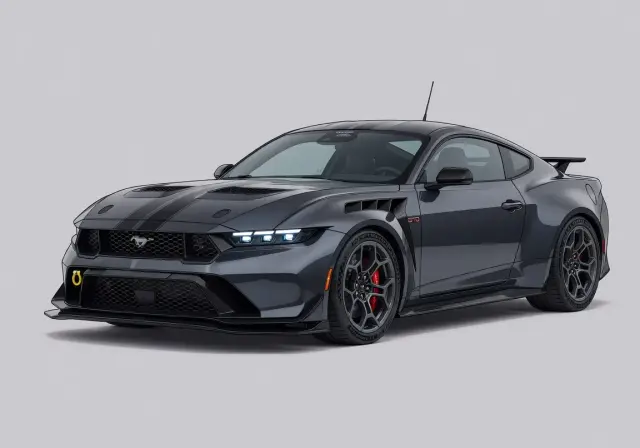 Ford Mustang 10.60s133.0 mph
 - 2
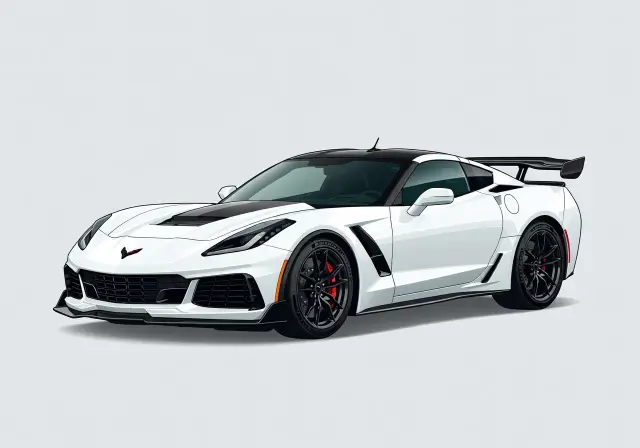 Chevrolet Corvette 10.80s133.1 mph
 - 3
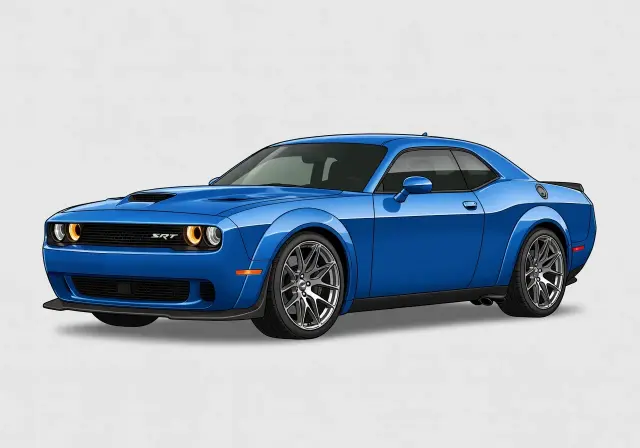 Dodge Challenger 10.90s127.0 mph
 - 4
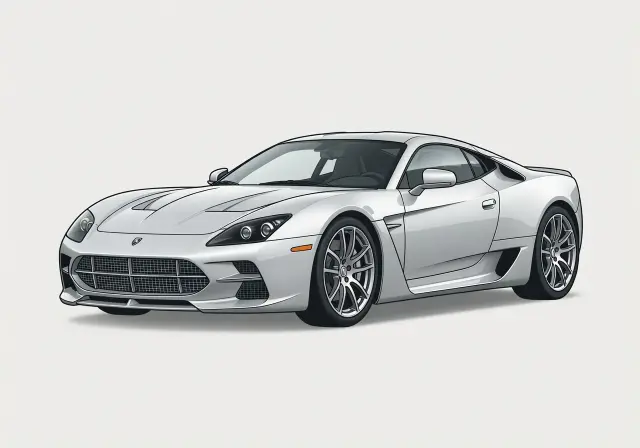 Mosler MT900 11.00s135.0 mph
 - 5
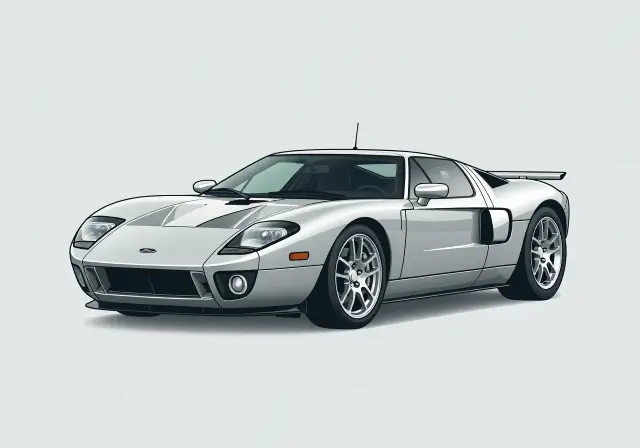 Ford GT 11.20s131.2 mph
 - 6
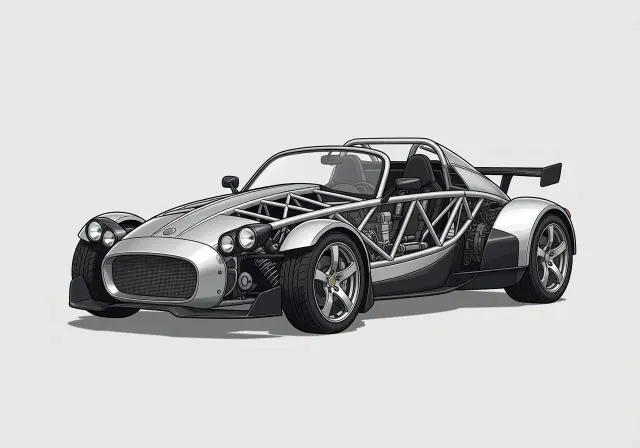 Ariel Atom 11.20s125.0 mph
 - 7
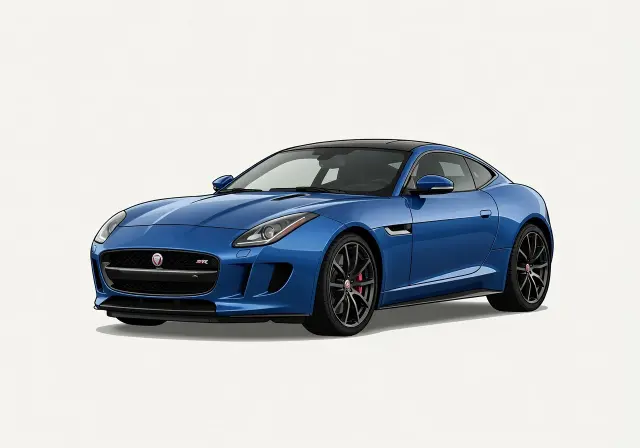 Jaguar F-Type 11.20s126.3 mph
 - 8
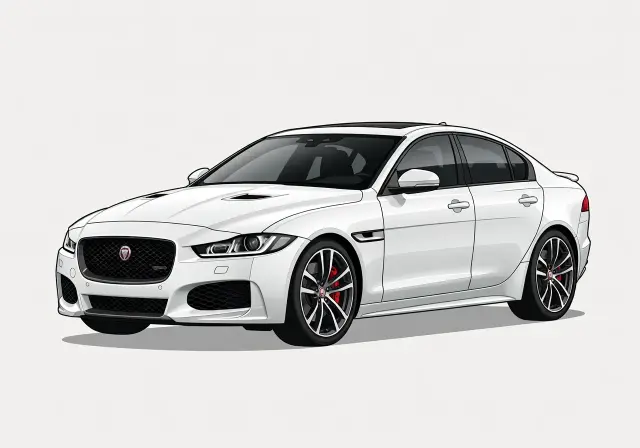 Jaguar XE 11.40s122.0 mph
 - 9
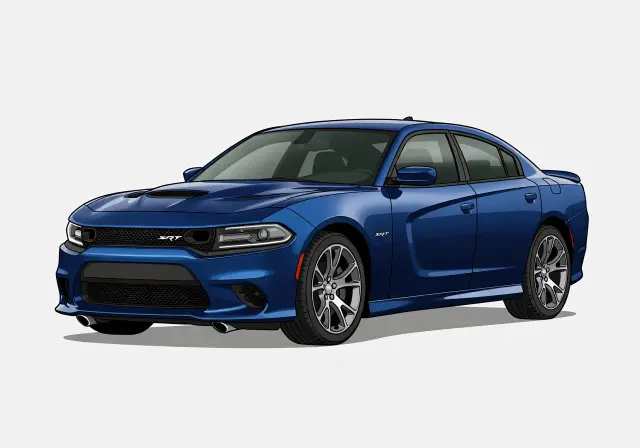 Dodge Charger 11.40s128.0 mph
 - 10
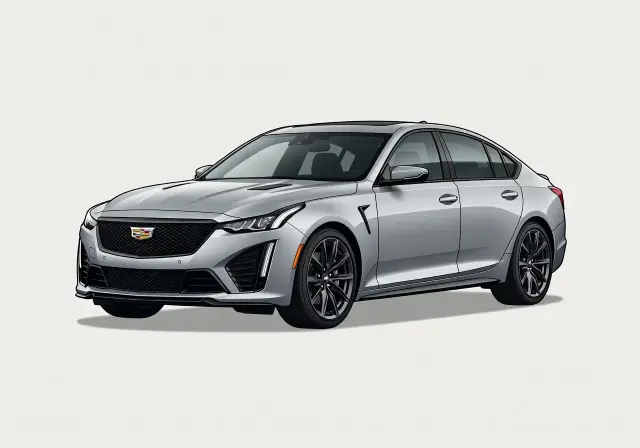 Cadillac CT5-V 11.40s128.0 mph
02 /
Methodology & Eligibility
- Production-only by default. The canonical ranking counts factory-production vehicles. Use the toggle to include modified / tuner builds.
- One entry per model. Each model is represented by its single fastest verified result — repeated publication tests are collapsed.
- Ranked by Quarter Mile. Lower is faster; ties are broken by the earliest recorded test. Elapsed time from a standing start over a quarter mile — trap speed is shown alongside it but does not affect the order.
- Verified tests only. Every result comes from an independently published road test in our database.
03 /
Full Rankings
vehicles shown
04 /
Category Statistics
10.60sFastest Quarter Mile
13.00sMedian
13.23sAverage
16.80sSlowest qualifying
83Qualifying vehicles
107.9 mphAverage trap speed
135.0 mphHighest trap speed
Median is preferred over average — it is less influenced by a handful of exceptionally quick outliers. Statistics reflect production results only. Trap speed is recorded as the car crosses the quarter-mile stripe and is reported for 83 of the 83 qualifying vehicles.
05 /
Common Traits Among the Fastest Supercharged Cars
This field is defined by supercharging, with no naturally aspirated or turbocharged entries. Rear-wheel drive accounts for 49 percent of the group, all-wheel drive 36 percent, and front-wheel drive 14 percent. Manual transmissions make up 24 percent. Most are gasoline-powered, with 82 gasoline cars and 1 hybrid.
As a set, these cars average 419 hp, 399 lb-ft, and 4016 lb, with a median weight of 3950 lb. Their average power-to-weight works out to 105.4 hp per 1000 lb, or 9.6 lb per hp, and the average quarter-mile trap speed is 108 mph. Mercedes-Benz, Audi, and Jaguar are the most common makes in the ranking.
49%Rear-wheel drive
36%All-wheel drive
14%Front-wheel drive
419 hpAvg horsepower
399 lb-ftAvg torque
4,016 lbAvg curb weight
105.4 hp/1,000 lbPower-to-weight
24%Manual gearbox
0%Turbocharged
2010Avg model year
06 /
What Decides a Quarter-Mile Time
Quarter-mile elapsed time is not decided by output alone. This group averages 419 hp and 105.4 hp per 1000 lb, and its average trap speed is 108 mph, which shows that power-to-weight still matters because the car is accelerating through the finish. But elapsed time also depends on how cleanly the run starts.
The first 60 feet are shaped by launch, gearing, traction, and weight transfer, and the run does not recover a poor start. That is why ET and trap speed can point to different strengths: trap speed reflects power-to-weight more directly, while ET also captures how effectively a car put that performance down from the line.
Horsepower vs Quarter Mile
One dot per vehicle · 83 plotted One dot per vehicle · 83 plotted
10s 12s 14s 16s 200 400 600 800 Horsepower → Quarter Mile (seconds) →
10s 12s 14s 16s 200 400 600 800 Horsepower → Quarter Mile (seconds) →
Top 10 ranked All other vehicles
Each dot is one vehicle at its fastest verified run. Exact figures for every point are in the full rankings.
07 /
Brands With the Most Supercharged Cars
08 /
Powertrain Breakdown
09 /
Supercharged Cars by Decade
The decade medians show a clear improvement in quarter-mile performance over time. The 1980s sit at 15, and the 1990s are 15.4. By the 2000s, the median drops to 13.1, then edges down again to 13 in the 2010s.
The 2020s bring the quickest decade median at 12.4, continuing the trend toward lower elapsed times. In this category, the biggest step change appears between the 1990s and 2000s, while the 2010s and 2020s show the more incremental refinement that now defines the top end of the ranking.
10 /
Records & Superlatives
The quickest verified run here is the 2025 Ford Mustang at 10.6 and 133 mph, which also leads the rear-wheel-drive and automatic groups. The all-wheel-drive benchmark is the 2017 Jaguar F-Type at 11.2 and 126.3 mph, the front-wheel-drive mark is the 2000 Toyota Camry at 14.3 and 99.3 mph, and the hybrid record is the 2023 Genesis G90 at 13.5 and 106 mph.
The manual-transmission leader, the 2006 Mosler MT900, is a useful contrast: it trapped 135 mph, the highest figure listed among the record-holders, yet its 11.0 ET was slower than the Mustang's 10.6 at 133 mph. That spread shows how a higher trap speed does not always produce the quicker elapsed time when the launch and early part of the pass differ.
12 /
Frequently Asked Questions
Which supercharged car is quickest in the quarter mile?
The current leader is the 2025 Ford Mustang, which covered the quarter mile in 10.6 seconds. It is a 2025 model rated at 800 hp, and its run backed that elapsed time with a 133 mph trap speed.
What trap speed does the fastest car run?
The quickest car in this ranking, 2025 Ford Mustang, crossed the quarter mile at 133 mph. That matters because trap speed is the clearest indicator of how much power-to-weight the car carried through the full run, while ET also reflects the launch.
What is a typical quarter-mile result for supercharged cars?
Across 83 qualifying Supercharged Cars, the average result is 13.23 seconds and the median is 13 seconds. The field average trap speed is 107.9 mph, which helps show the pace these cars carry at the finish, not just how quickly they leave the line.
How wide is the spread in this supercharged quarter-mile ranking?
It runs from the leading 10.6 seconds by 2025 Ford Mustang to a slowest qualifying time of 16.8 seconds. That range shows this category includes both focused high-output models and heavier, less launch-optimized entries that still meet the same quarter-mile standard.
Why is this ranking sorted by elapsed time instead of trap speed?
Because the ordered measure here is quarter mile, the list is ranked by how quickly each car covered the quarter mile in. Trap speed is included as supporting context, but ET decides position since it captures the whole pass, especially the launch and early traction.