
Rankings are based on independently published 0–60 mph tests currently included in the 0–60 Specs database. Vehicles without a qualifying published test in our database are not included.
Fastest Cars of the 1950's from 0-60
Median 0–60 mph 9.80sec Average 11.47s
Qualifying Vehicles 17 1952–1959 model years
Verified Tests 31 Tests in this category
01 /
Top 10 Fastest by 0–60 mph
- 1
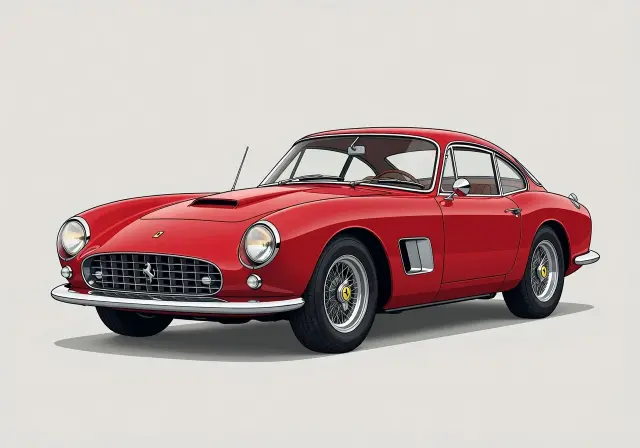 Ferrari 410 5.60s
 - 2
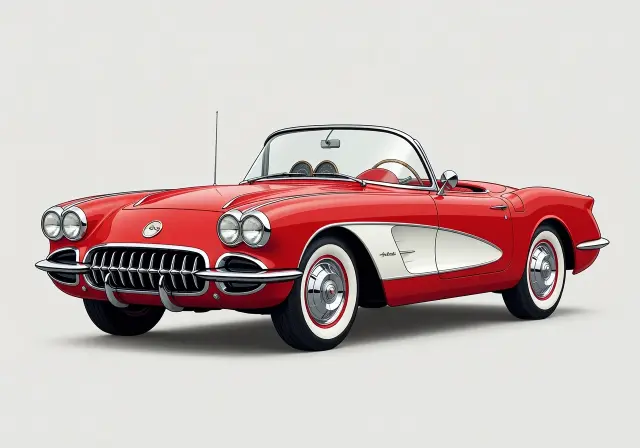 Chevrolet Corvette 6.40s
 - 3
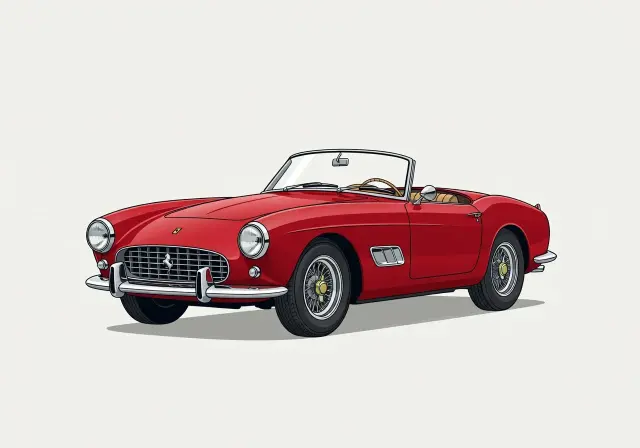 Ferrari 212 7.05s
 - 4
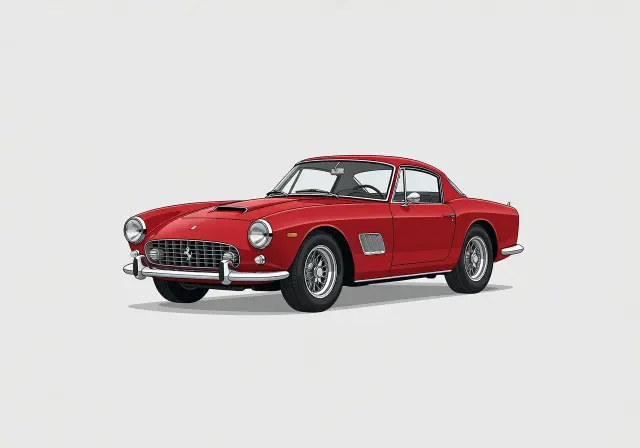 Ferrari 250 7.20s
 - 5
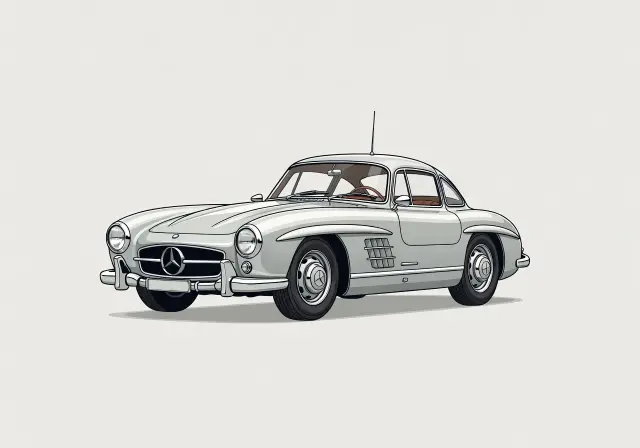 Mercedes-Benz 300 SL 7.40s
 - 6
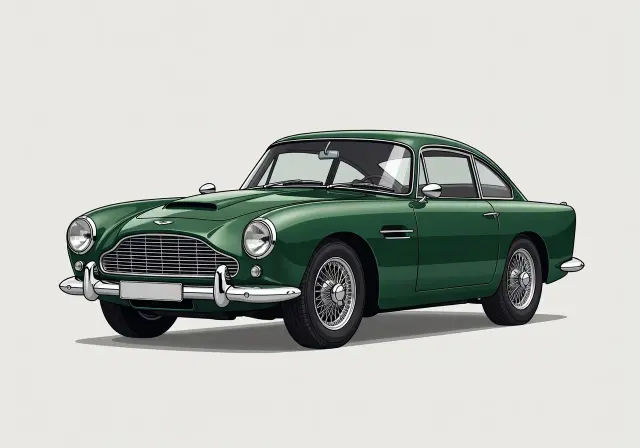 Aston Martin DB4 7.50s
 - 7
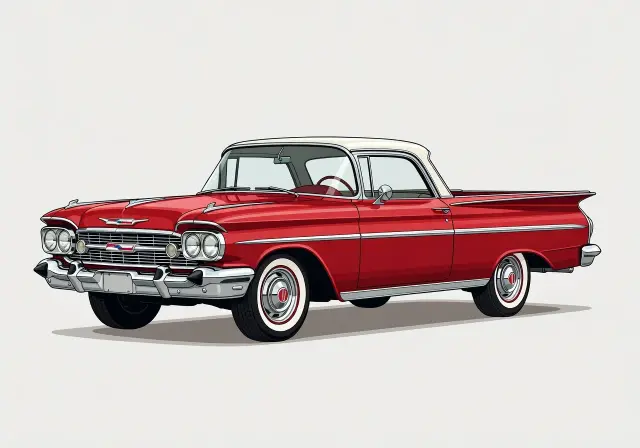 Chevrolet El Camino 8.70s
 - 8
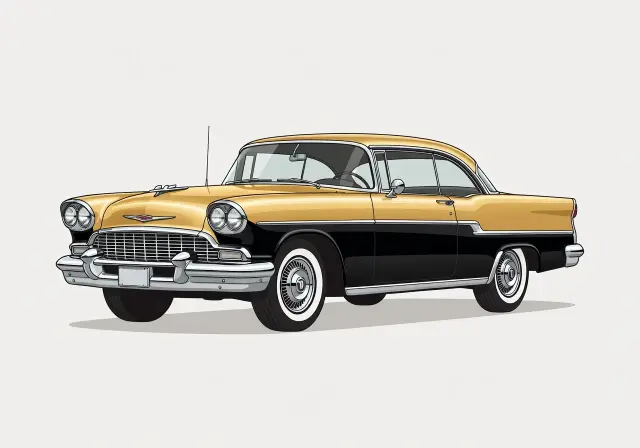 Chrysler 300 Letter Series 9.70s
 - 9
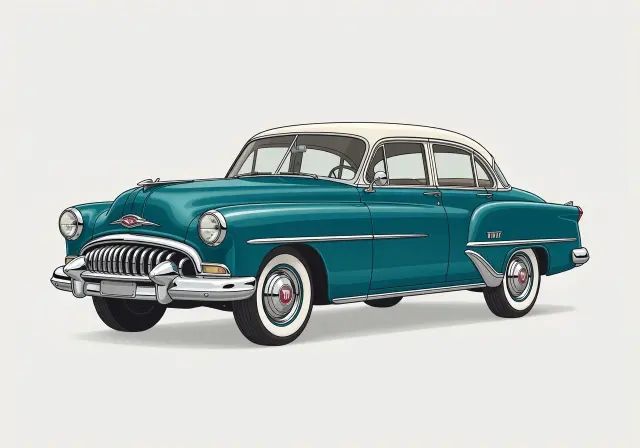 Buick Century 9.80s
 - 10
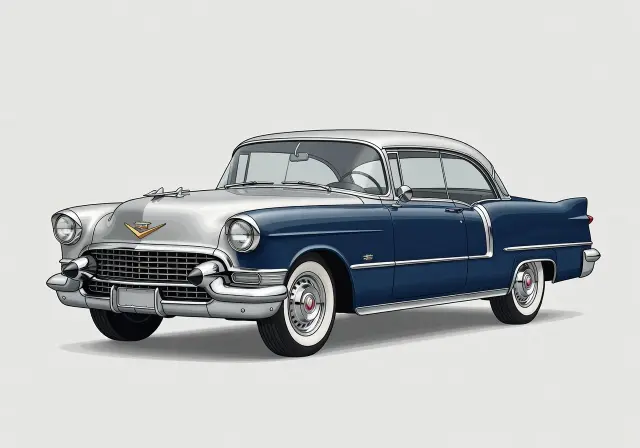 Cadillac Eldorado 10.00s
02 /
Methodology & Eligibility
- Production-only by default. The canonical ranking counts factory-production vehicles. Use the toggle to include modified / tuner builds.
- One entry per model. Each model is represented by its single fastest verified result — repeated publication tests are collapsed.
- Ranked by 0–60 mph. Lower is faster; ties are broken by the earliest recorded test.
- Verified tests only. Every result comes from an independently published road test in our database.
03 /
Full Rankings
vehicles shown
04 /
Category Statistics
5.60sFastest 0–60 mph
9.80sMedian
11.47sAverage
28.80sSlowest qualifying
17Qualifying vehicles
Median is preferred over average — it is less influenced by a handful of exceptionally quick outliers. Statistics reflect production results only.
05 /
Common Traits Among the Fastest Cars of 1950's
This group is entirely rear-wheel drive, with RWD at 100 percent and AWD and FWD both at 0 percent. It is also overwhelmingly manual, with 82 percent using manual transmissions. Every qualifying car here is gasoline-powered and naturally aspirated, with naturally aspirated at 100 percent and turbocharged at 0 percent.
As a set, these 1950s cars average 195 hp, 212 lb-ft, and 3075 lb, with a median weight of 2930 lb. Their average power-to-weight figures come in at 61.7 hp per 1000 lb and 15.8 lb per hp, which helps explain why cars like the 1957 Ferrari 410 and 1957 Chevrolet Corvette rise to the top of the order.
100%Rear-wheel drive
0%All-wheel drive
0%Front-wheel drive
195 hpAvg horsepower
212 lb-ftAvg torque
3,075 lbAvg curb weight
61.7 hp/1,000 lbPower-to-weight
82%Manual gearbox
0%Turbocharged
1957Avg model year
06 /
Why Horsepower Isn't Everything
Raw output alone does not settle 0-60 results. This field averages 195 hp, yet acceleration depends just as much on how much mass that power has to move, how the gearing multiplies it, and how effectively the tires and rear-wheel-drive layout can put it to the ground. The group's average of 61.7 hp per 1000 lb and 15.8 lb per hp gives better context than horsepower by itself.
That is why lighter or better-geared cars can outperform stronger-looking rivals on paper. In this set, a focused sports car such as the 1952 Ferrari 212 or 1955 Mercedes-Benz 300 SL can convert modest weight and drivetrain efficiency into quicker launches than heavier cars with comparable or greater engine output.
Horsepower vs 0–60 mph
One dot per vehicle · 17 plotted One dot per vehicle · 17 plotted
5s 10s 15s 20s 25s 30s 0 100 200 300 400 Horsepower → 0–60 mph (seconds) →
5s 10s 15s 20s 25s 30s 0 100 200 300 400 Horsepower → 0–60 mph (seconds) →
Top 10 ranked All other vehicles
Each dot is one vehicle at its fastest verified run. Exact figures for every point are in the full rankings.
07 /
Brands With the Most Cars of 1950's
08 /
Powertrain Breakdown
09 /
Cars of 1950's by Decade
Within this ranking, the decade picture is simple: all 17 qualifying cars come from the 1950s, and the median 0-60 mph time for the decade is 9.8 seconds. That places the typical car in this set well behind the very quickest entries, even though the leaders dip far lower.
Because the qualifying years run only from 1952 to 1959, there is no cross-decade progression to chart inside this page alone. Instead, the main takeaway is the spread within one era, from the leading Ferrari 410 through cars such as the 1959 Aston Martin DB4 and 1958 Chrysler 300 Letter Series, against that 9.8-second median.
10 /
Records & Superlatives
The record table is tightly focused because the category itself is tightly focused. The fastest naturally aspirated car is the 1957 Ferrari 410 at 5.6 seconds, and because every entry here is naturally aspirated and rear-wheel drive, it also holds the rear-wheel-drive and manual records at the same 5.6-second mark.
The only contrasting benchmark is the automatic record, held by the 1958 Chrysler 300 Letter Series at 9.7 seconds. There are no turbocharged or electric entries in this group, so those comparisons are absent. What the spread does show is a clear gap between the quickest manual RWD sports-focused cars and the best automatic result within the same decade slice.
12 /
Frequently Asked Questions
Which car is quickest in this 1950s ranking?
The quickest entry is 1957 Ferrari 410, and it reaches 60 mph in 5.6 seconds. It is the benchmark for this group and sets the pace for how the rest of the field is ordered.
How many vehicles are included, and what kind of time spread does the list cover?
This ranking includes 17 vehicles. The field runs from the category leader at 5.6 seconds to the slowest qualifying result at 28.8 seconds, so it captures both standout performers and more typical period acceleration.
What is a typical 0-60 mph time for these cars?
The middle of the field is represented by a median of 9.8 seconds, while the mean comes in at 11.47 seconds. Together, those figures show what typical performance looks like beyond the quickest few entries.
Why is the ranking ordered by 0-60 mph instead of horsepower?
The page is sorted by 0–60 mph, so placement reflects measured acceleration rather than engine size or output alone. That matters because lighter cars, shorter gearing, and better traction can rank ahead of more powerful but less efficient combinations.
What qualifies a vehicle for this 1950s list?
A vehicle qualifies if it is one of the Cars of 1950's with a recorded 0–60 mph time in this database. Once included, it is ranked from quickest to slowest using that same acceleration measure.