
Aston Martin DB4 0–60 Times
The Aston Martin DB4 0–60 times and quarter-mile times below are from 3 recorded performance tests sourced from reputable automotive resources such as Car and Driver and Road & Track and more.
The fastest tested Aston Martin DB4 is the 1963 Aston Martin DB4 Vantage Coupe, which went from 0 to 60 mph in 6.80 seconds, reaching the ¼ mile in 15.40 seconds at 94.0 mph, according to Car and Driver.
The slowest tested Aston Martin DB4 is the 1959 Aston Martin DB4 Coupe, which took 7.50 seconds to reach 60 mph, running the ¼ mile in 15.80 seconds at 94.0 mph, according to Road & Track.
Out of all the Aston Martin DB4 tests in our database, the average 0–60 mph time is 7.23 seconds. The average quarter-mile time is 15.50 seconds at 93.67 mph.
Fastest 0–60
6.80sec
1963 Vantage Coupe · stock
Average 0–60
7.23sec
Across 3 runs
Avg ¼ Mile
15.50sec
@ 93.7 mph trap
Slowest 0–60
7.50sec
1959 Coupe
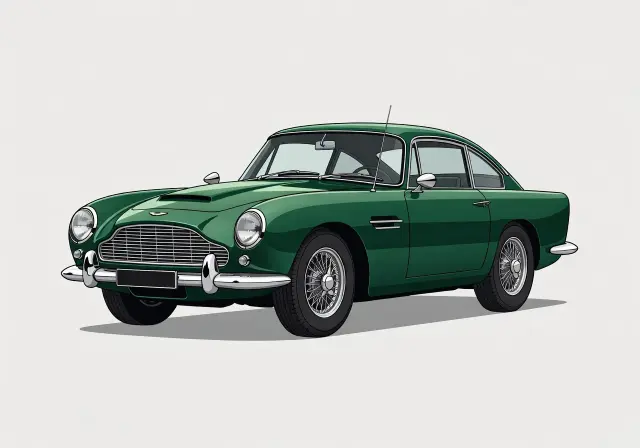
Across 3 verified runs, the Aston Martin DB4 ranges from 6.80 to 7.50 seconds 0–60, with a 7.23-second average.
The Aston Martin DB4 is ranked in these lists
01 /
Aston Martin DB4 Performance Overview
Aston Martin’s DB4 performance story is contained within a short, focused run from 1959 to 1963, covered here by 3 independently verified tests. Across that span, the DB4 remained a naturally aspirated gasoline grand tourer, with output ranging from 240 to 314 hp and engine development reflected in codes such as DB4GT and DB4/370. The earliest recorded benchmark, the 1959 Coupe, reached 60 mph in 7.5 seconds, establishing the baseline for the model’s production life.
As the DB4 matured through its single DB4 generation, performance improved in measured steps. The 1962 GT Zagato Coupe lowered the 0-60 mark to 7.4 seconds and recorded the model’s quickest quarter-mile at 15.3 seconds at 93 mph. By 1963, the Vantage Coupe delivered the quickest launch of the series at 6.8 seconds to 60 mph, the best figure among all tested DB4 variants.
Taken as a whole, the DB4’s verified results average 7.23 seconds to 60 mph and 15.5 seconds in the quarter-mile at 93.7 mph. With no later generations, hybridization, or electric variants to extend the line, the DB4 stands today as a compact, clearly defined performance record within Aston Martin’s late-1950s and early-1960s production history.
02 /
Aston Martin DB4 0–60 Times by Generation
1 generation| Generation | Years | Avg 0–60 | Fastest 0–60 | Tests | Notes |
|---|---|---|---|---|---|
| DB4 | 1958–1963 | 7.23s | 6.80s — 1963 Vantage Coupe | 3 | The DB4 generation (1958–1963) averaged 7.23 seconds to 60 mph across 3 tests, led by the 1963 Vantage Coupe at 6.80 seconds. Output ranged from 240 to 314 hp across 3.7L I-6 configurations. |
DB4
1958–1963
Avg 0–60
7.23s
Fastest
6.80s
Tests
3
1963 Vantage Coupe
The DB4 generation (1958–1963) averaged 7.23 seconds to 60 mph across 3 tests, led by the 1963 Vantage Coupe at 6.80 seconds. Output ranged from 240 to 314 hp across 3.7L I-6 configurations.
03 /
Aston Martin DB4 0–60 Times by Year and Trim
3 tests · 3 years
▾
1963 Aston Martin DB4
1 verified run
Avg 0–60
6.80
sec
Avg ¼ Mile
15.40
sec
Recorded Tests
1
#01
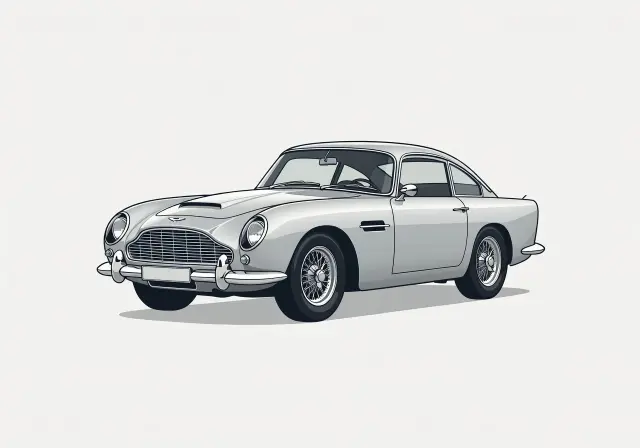
1963 Aston Martin DB4 Vantage Coupe
6.80sec 0–60
0.0s · 0mph
0.0s · 0mph
15.40s
¼ mi @ 94.0 mph
▾
- 0–60 mph
- 6.80 sec
- ¼ Mile ET
- 15.40 sec
- Trap Speed
- 94.0 mph
- Engine
- 3.7L I-6
- Drivetrain
- RWD
- Transmission
- 4M
- Horsepower
- 266 hp
- Curb Weight
- 3,080 lbs
- Power-to-Weight
- 11.6 lbs/hp
- Production Vehicle
- Body Type
- Coupe
- Powertrain
- Gasoline
- Test Source
- Car and Driver
- Overall Rank
- #1 of 3
How we verify Aston Martin DB4 performance data
We include only independently published road-test results from automotive publications. Manufacturer-claimed 0–60 times are excluded unless clearly labeled. When multiple publications test the same Aston Martin DB4 trim, each run is listed separately — weather, tires, surface, rollout, and instrumentation all affect results.
04 /
Aston Martin DB4 0–60 and quarter-mile distribution
0–60 vs ¼ mile · lower-left is fasterEach dot is a recorded test run
0–60 →
¼ mile →
Fastest
Recorded run
Slowest
05 /
Aston Martin DB4 performance FAQs
10 questions
The 1963 Aston Martin DB4 Vantage Coupe does 0-60 mph in 6.8 seconds. Its quarter-mile time is 15.4 seconds at 94 mph. That makes it the quickest DB4 on record and also the fastest stock DB4 tested.
The fastest Aston Martin DB4 on record is the 1963 DB4 Vantage Coupe, with a 0-60 mph time of 6.8 seconds. It is also a stock car, so the quickest overall DB4 and the quickest stock DB4 are the same test result.
The fastest stock Aston Martin DB4 is the 1963 Vantage Coupe. It reached 60 mph in 6.8 seconds and ran the quarter mile in 15.4 seconds at 94 mph. There are no modified DB4 runs here, so the stock benchmark is also the overall benchmark.
Across 3 verified Aston Martin DB4 tests, the average 0-60 mph time is 7.23 seconds. Average quarter-mile performance is 15.5 seconds at 93.7 mph. The quickest DB4 reached 60 mph in 6.8 seconds, while the slowest recorded run took 7.5 seconds.
The DB4 generation, built from 1958 to 1963, averages 7.23 seconds from 0-60 mph across 3 tests. The fastest version is the 1963 Vantage Coupe at 6.8 seconds. Power ranges from 240 to 314 hp, with naturally aspirated gasoline engines throughout the generation.
The quickest car from the DB4 generation is the 1963 Aston Martin DB4 Vantage Coupe. Its best recorded 0-60 mph time is 6.8 seconds. Within the 1958-1963 DB4 range, that makes it the performance leader on record.
The 1962 Aston Martin DB4 GT Zagato Coupe reaches 60 mph in 7.4 seconds. It also owns the fastest quarter-mile pass among recorded DB4 tests, running 15.3 seconds at 93 mph. That gives it the best 1320-foot result, even though its 0-60 time is slower than the 1963 Vantage Coupe.
The DB4 Vantage Coupe is quicker to 60 mph. The 1963 Vantage Coupe recorded 6.8 seconds, while the 1962 GT Zagato Coupe posted 7.4 seconds. That gives the Vantage a 0.6-second advantage in the recorded 0-60 runs.
The 1963 DB4 Vantage Coupe ran 0-60 mph in 6.8 seconds, while the 1959 DB4 Coupe took 7.5 seconds. That means the Vantage is 0.7 seconds quicker to 60 mph in recorded testing. The 1959 Coupe is also the slowest DB4 run on record.
The Aston Martin DB4 averages 15.5 seconds at 93.7 mph in the quarter mile across 3 tests. The quickest quarter-mile pass belongs to the 1962 DB4 GT Zagato Coupe at 15.3 seconds and 93 mph. The 1963 Vantage Coupe followed closely with a 15.4-second run at 94 mph.
Sources
Car and Driver
Road & Track
0–60 and quarter-mile times vary with driver, weather, tire temperature, and wear. We collect every verified run we can find — so you see the range of what an Aston Martin DB4 can do, not a single marketing claim.
06 /
Used Aston Martin DB4s for Sale
Browse used Aston Martin DB4 listings on Edmunds to compare available model years, trims, mileage, prices, and vehicles for sale near you.
Sell your current car →We may earn a commission when you visit Edmunds through these links.
07 /
Other Aston Martin 0–60 times
08 /
Are we missing a performance test for Aston Martin DB4?
Log in to suggest a missing test.