
Rankings are based on independently published 0–60 mph tests currently included in the 0–60 Specs database. Vehicles without a qualifying published test in our database are not included.
Fastest Minivans: Top 0-60 Times
Median 0–60 mph 8.15sec Average 8.74s
Qualifying Vehicles 20 1992–2025 model years
Verified Tests 190 Tests in this category
01 /
Top 10 Fastest by 0–60 mph
- 1
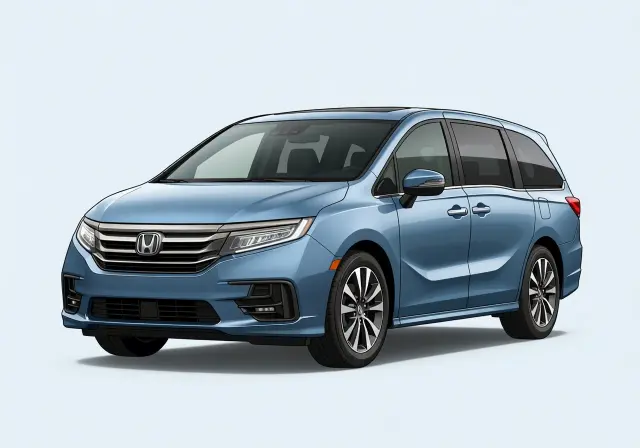 Honda Odyssey 6.40s
 - 2
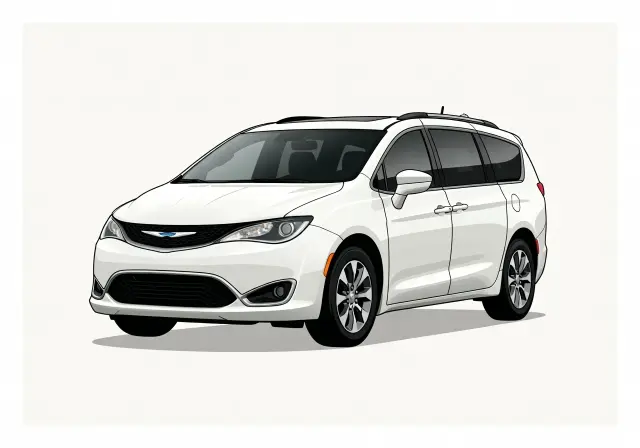 Chrysler Pacifica 6.70s
 - 3
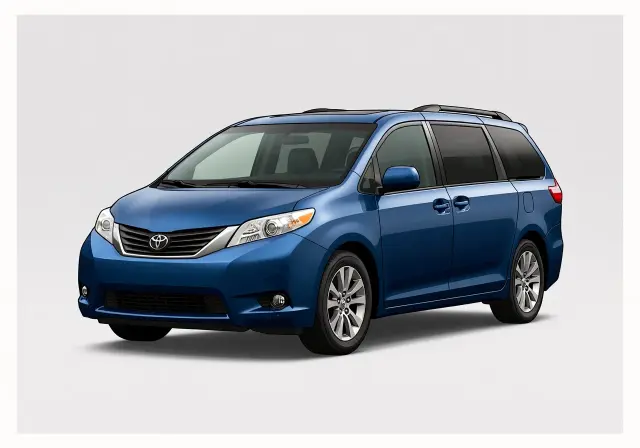 Toyota Sienna 6.80s
 - 4
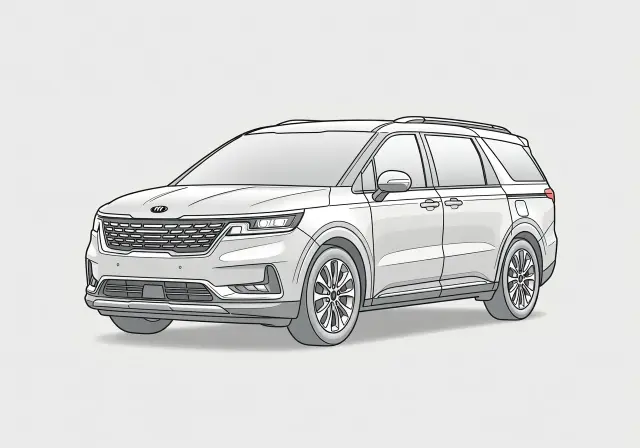 Kia Carnival MPV 7.00s
 - 5
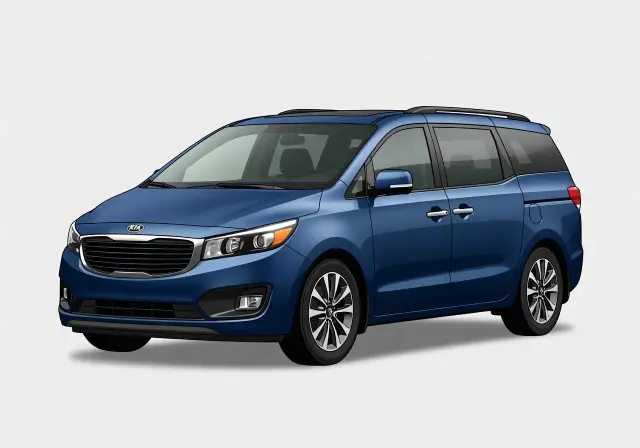 Kia Sedona 7.40s
 - 6
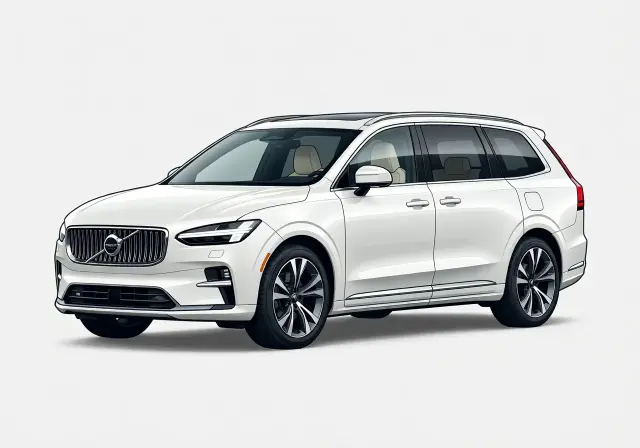 Volvo EM90 7.50s
 - 7
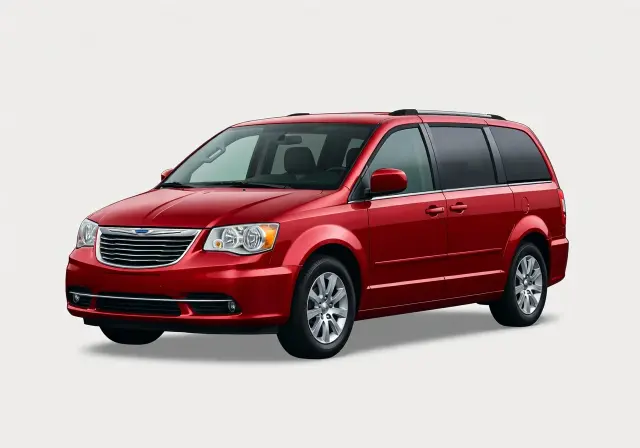 Chrysler Town & Country 7.60s
 - 8
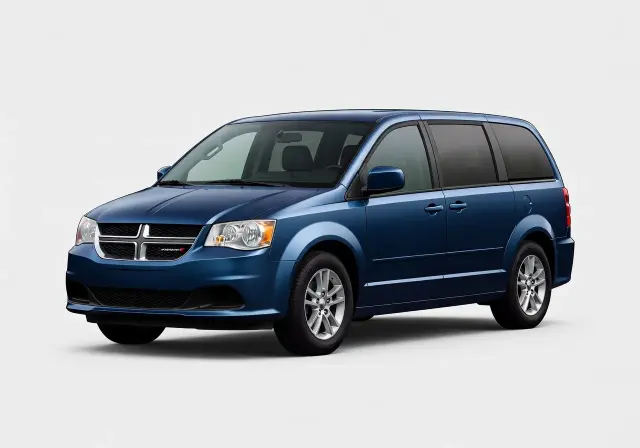 Dodge Grand Caravan 7.60s
 - 9
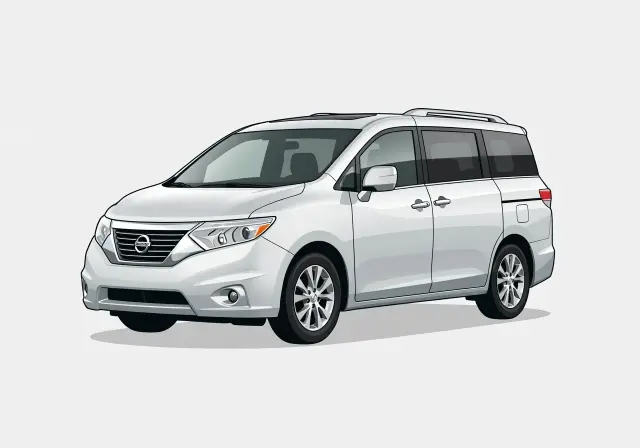 Nissan Quest 7.90s
 - 10
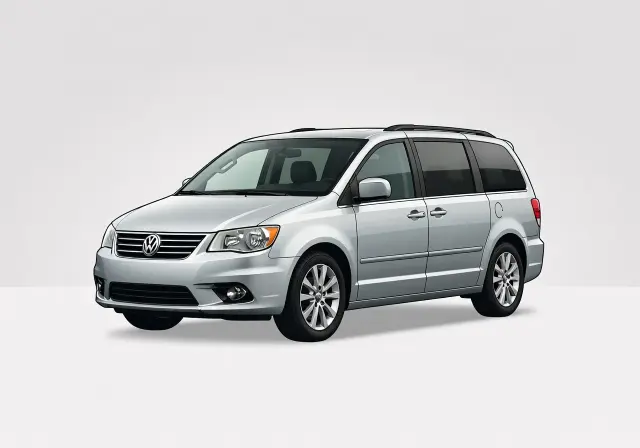 Volkswagen Routan 8.10s
02 /
Methodology & Eligibility
- Production-only by default. The canonical ranking counts factory-production vehicles. Use the toggle to include modified / tuner builds.
- One entry per model. Each model is represented by its single fastest verified result — repeated publication tests are collapsed.
- Ranked by 0–60 mph. Lower is faster; ties are broken by the earliest recorded test.
- Verified tests only. Every result comes from an independently published road test in our database.
03 /
Full Rankings
vehicles shown
04 /
Category Statistics
6.40sFastest 0–60 mph
8.15sMedian
8.74sAverage
12.00sSlowest qualifying
20Qualifying vehicles
Median is preferred over average — it is less influenced by a handful of exceptionally quick outliers. Statistics reflect production results only.
05 /
Common Traits Among the Fastest Minivans
This group is defined by front-drive packaging and mainstream gasoline power. Front-wheel drive accounts for 90 percent of the field, with rear-wheel drive at 10 percent and no all-wheel-drive entries. Naturally aspirated engines make up 95 percent, turbocharged models are absent, and manuals represent 10 percent. Gasoline covers 95 percent of the list, with one electric entry at 5 percent.
Output and mass are moderate rather than extreme. The average minivan here makes 227 hp and 222 lb-ft, while average weight is 4,298 lb and median weight is 4,440.5 lb. That leaves the group at 52.5 hp per 1,000 lb, or 18.9 lb per hp, which helps explain why the quickest entries rely on balanced packaging more than headline power alone.
10%Rear-wheel drive
0%All-wheel drive
90%Front-wheel drive
227 hpAvg horsepower
222 lb-ftAvg torque
4,298 lbAvg curb weight
52.5 hp/1,000 lbPower-to-weight
10%Manual gearbox
0%Turbocharged
2010Avg model year
06 /
Why Horsepower Isn't Everything
Acceleration in this class is shaped by more than engine output. Across the ranking, the average is 227 hp, but the more telling figure is 52.5 hp per 1,000 lb, because every launch has to move an average 4,298 lb. That is why raw horsepower alone cannot predict 0-60 mph performance in a field built around family-duty size and weight.
Gearing, tire grip, and drivetrain layout matter just as much. With 90 percent front-wheel drive, traction off the line can be a limiting factor, especially in heavier vehicles. A lighter or better-geared model can outperform a more powerful rival, which is why vans such as the 2025 Honda Odyssey and 2014 Nissan Quest are best understood through the full package, not horsepower in isolation.
Horsepower vs 0–60 mph
One dot per vehicle · 20 plotted One dot per vehicle · 20 plotted
6s 8s 10s 12s 150 200 250 300 Horsepower → 0–60 mph (seconds) →
6s 8s 10s 12s 150 200 250 300 Horsepower → 0–60 mph (seconds) →
Top 10 ranked All other vehicles
Each dot is one vehicle at its fastest verified run. Exact figures for every point are in the full rankings.
07 /
Brands With the Most Minivans
08 /
Powertrain Breakdown
09 /
Minivans by Decade
The decade medians trace a clear improvement in straight-line pace. In the 1990s, the median 0-60 mph time was 10.7 seconds across 3 models. The 2000s barely changed at 10.6 seconds across 5 models, showing that early progress in this segment was limited even as the field expanded.
The larger shift arrived in newer generations. The 2010s posted a 7.6-second median across 9 models, and the 2020s improved further to 7 seconds across 3 models. That pattern suggests the biggest gains came from more recent powertrains and transmissions rather than from any dramatic change in the basic minivan formula.
10 /
Records & Superlatives
The record holders show a narrow but meaningful spread. The fastest naturally aspirated, front-wheel-drive, and automatic entry is the 2025 Honda Odyssey at 6.4 seconds. The electric and rear-wheel-drive benchmark is the 2025 Volvo EM90 at 7.5 seconds, while the quickest manual is the 2014 Mazda Mazda5 at 8.2 seconds and the fastest CVT is the 2014 Nissan Quest at 7.9 seconds.
There is no turbocharged record because this ranking has no turbo entries. What the spread does show is that transmission choice and drivetrain layout influence results, but not in a simple hierarchy. In this set, the quickest benchmark belongs to a front-drive naturally aspirated automatic, not the lone electric or the rear-drive entry.
12 /
Frequently Asked Questions
Which minivan is quickest to 60 mph?
The quickest entry is the 2025 Honda Odyssey, specifically the Elite, with a 0–60 mph time of 6.4 seconds. It is a 2025 model rated at 280 hp, and it sets the benchmark for this ranking.
How many minivans are in this 0-60 mph ranking?
This ranking includes 20 Minivans. That gives a useful snapshot of the category, from the quickest examples at the top to the slowest qualifying vehicles at 12 seconds.
What is a typical 0-60 mph time for minivans?
A typical result sits around the middle of the field, where the median is 8.15 seconds. The overall average is 8.74 seconds, so most Minivans in this ranking land in that general range rather than near the record.
Why are some minivans with similar power ranked differently?
The order is based strictly on 0–60 mph, so vehicles are ranked by measured acceleration result, not by output alone. Weight, gearing, tire grip, and drivetrain traction can all change how effectively a minivan turns its power into a launch.
What qualifies a vehicle for this minivan list?
A vehicle qualifies if it fits the Minivans category and has a verified 0–60 mph result. Once included, it is placed by time, which is why the leader, the median performers, and the slowest entries can all be compared on the same scale.