
BMW 530 0–60 Times
The BMW 530 0–60 times and quarter-mile times below are from 20 verified production tests sourced from reputable automotive resources such as Car and Driver, Motor Trend and MotorWeek and more.
The fastest tested production BMW 530 is the 2021 BMW 530 530e Sedan (M Sport), which went from 0 to 60 mph in 5.20 seconds, reaching the ¼ mile in 13.80 seconds at 100.0 mph, according to Car and Driver.
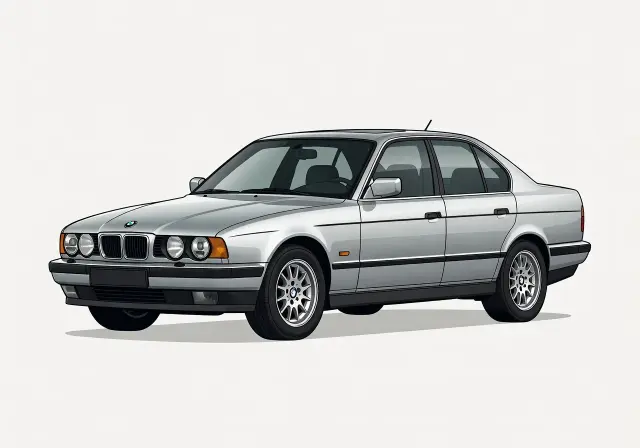
The slowest tested production BMW 530 is the 1995 BMW 530 530i Sedan, which took 8.90 seconds to reach 60 mph, running the ¼ mile in 16.70 seconds at 88.3 mph, according to Motor Trend.
Across the 20 verified production tests of the BMW 530, the average 0–60 mph time is 6.59 seconds. The average quarter-mile time is 14.99 seconds at 94.21 mph.
Fastest 0–60 5.20sec 2021 530e Sedan (M Sport) · stock
Average 0–60 6.59sec Across 20 production runs
Avg ¼ Mile 14.99sec @ 94.2 mph trap
Slowest 0–60 8.90sec 1995 530i Sedan
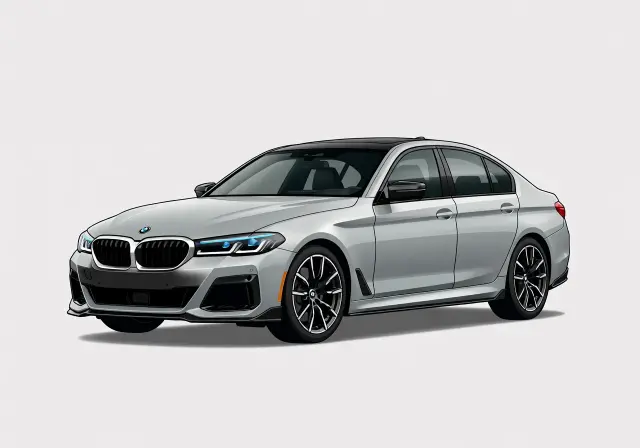
Across 20 verified production runs, the BMW 530 ranges from 5.20 to 8.90 seconds 0–60, with a 6.59-second average.
The BMW 530 is ranked in these lists
01 /
BMW 530 Performance Overview
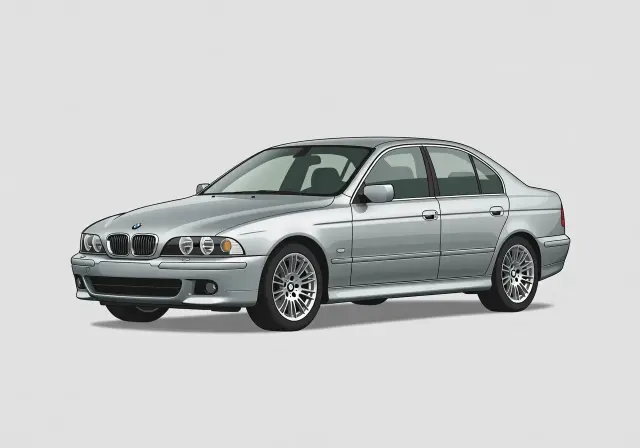
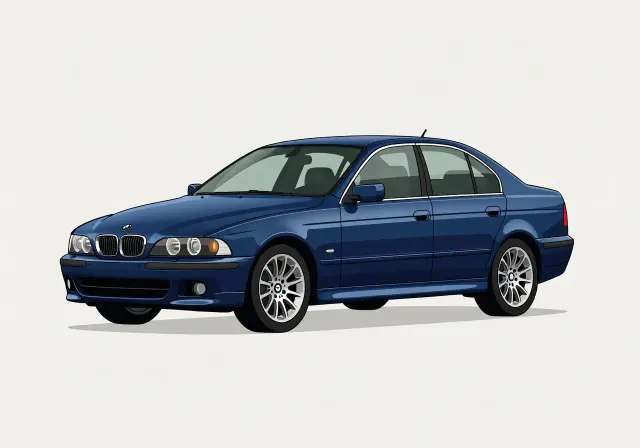
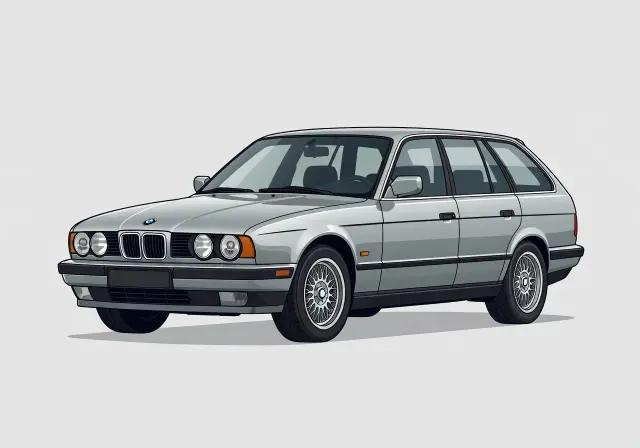
Across 20 independently verified tests spanning 1994 to 2024, the BMW 530 traces a steady move from naturally aspirated six- and eight-cylinder gasoline sedans and wagons to turbocharged and electrified four-cylinder formats. The earliest data comes from the E34 era, where the M60B30 V8 made 215–218 hp and the 1995 530i Sedan needed 8.9 seconds to reach 60 mph, matching the 1994 530i Touring. With the E39, output shifted to the 225-hp M54B30 inline-six, and the 2003 530i Sedan (Sport) cut that to 6.7 seconds.
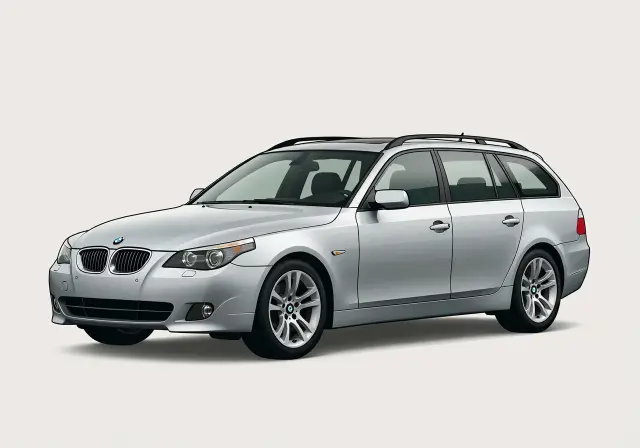
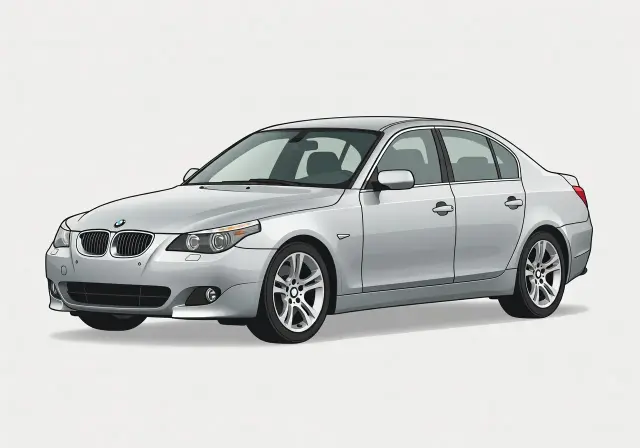
The E60 generation kept the 530 in the naturally aspirated gasoline lane, using M54B30 and later N52B30 engines rated from 225 to 255 hp. Its quickest recorded run, the 2004 530i Sedan (Sport), also posted 6.7 seconds to 60 mph, showing refinement more than a large step change. The larger performance shift arrived with G30, where turbocharged gasoline and plug-in hybrid powertrains broadened the range: the 2018 530e iPerformance Sedan (Sport) reached 60 mph in 6.0 seconds, and the 2021 530e Sedan (M Sport) set the model’s best figures at 5.2 seconds and 13.8 seconds in the quarter-mile.
Today’s G60 530 is exclusively hybrid in this dataset, with 255 hp from the B48-based setup. The current benchmark is the 2024 530i Sedan (M Sport) at 5.5 seconds, placing the latest car close to the G30 peak while standardizing electrified assistance.
02 /
BMW 530 0–60 Times by Generation: E34 to G60
5 generations| Generation | Years | Avg 0–60 | Fastest 0–60 | Production Tests | Notes |
|---|---|---|---|---|---|
| G60 | 2024–present | 5.65s | 5.50s — 2024 530i Sedan (M Sport) | 4 | The G60 generation (2024–present) averaged 5.65 seconds to 60 mph across 4 production tests, led by the 2024 530i Sedan (M Sport) at 5.50 seconds. Output was 255 hp across 2.0L Turbo I-4 + Elec configurations. |
| G30 | 2017–2023 | 5.99s | 5.20s — 2021 530e Sedan (M Sport) | 7 | The G30 generation (2017–2023) averaged 5.99 seconds to 60 mph across 7 production tests, led by the 2021 530e Sedan (M Sport) at 5.20 seconds. Output ranged from 248 to 288 hp across 2.0L Turbo I-4, 2.0L Turbo I-4 + Elec 9.1-kWh, 2.0L Turbo I-4 + Elec 9.2-kWh configurations. |
| E60 | 2004–2010 | 7.12s | 6.70s — 2004 530i Sedan (Sport) | 6 | The E60 generation (2004–2010) averaged 7.12 seconds to 60 mph across 6 production tests, led by the 2004 530i Sedan (Sport) at 6.70 seconds. Output ranged from 225 to 255 hp across 3.0L I-6 configurations. |
| E39 | 1996–2003 | 6.70s | 6.70s — 2003 530i Sedan (Sport) | 1 | The E39 generation (1996–2003) averaged 6.70 seconds to 60 mph across 1 production tests, led by the 2003 530i Sedan (Sport) at 6.70 seconds. Output was 225 hp across 3.0L I-6 configurations. |
| E34 | 1989–1995 | 8.90s | 8.90s — 1995 530i Sedan | 2 | The E34 generation (1989–1995) averaged 8.90 seconds to 60 mph across 2 production tests, led by the 1995 530i Sedan at 8.90 seconds. Output ranged from 215 to 218 hp across 3.0L V8 configurations. |
G60 2024–present
Avg 0–60 5.65s
Fastest 5.50s
Tests 4
2024 530i Sedan (M Sport)
The G60 generation (2024–present) averaged 5.65 seconds to 60 mph across 4 production tests, led by the 2024 530i Sedan (M Sport) at 5.50 seconds. Output was 255 hp across 2.0L Turbo I-4 + Elec configurations.
G30 2017–2023
Avg 0–60 5.99s
Fastest 5.20s
Tests 7
2021 530e Sedan (M Sport)
The G30 generation (2017–2023) averaged 5.99 seconds to 60 mph across 7 production tests, led by the 2021 530e Sedan (M Sport) at 5.20 seconds. Output ranged from 248 to 288 hp across 2.0L Turbo I-4, 2.0L Turbo I-4 + Elec 9.1-kWh, 2.0L Turbo I-4 + Elec 9.2-kWh configurations.
E60 2004–2010
Avg 0–60 7.12s
Fastest 6.70s
Tests 6
2004 530i Sedan (Sport)
The E60 generation (2004–2010) averaged 7.12 seconds to 60 mph across 6 production tests, led by the 2004 530i Sedan (Sport) at 6.70 seconds. Output ranged from 225 to 255 hp across 3.0L I-6 configurations.
E39 1996–2003
Avg 0–60 6.70s
Fastest 6.70s
Tests 1
2003 530i Sedan (Sport)
The E39 generation (1996–2003) averaged 6.70 seconds to 60 mph across 1 production tests, led by the 2003 530i Sedan (Sport) at 6.70 seconds. Output was 225 hp across 3.0L I-6 configurations.
E34 1989–1995
Avg 0–60 8.90s
Fastest 8.90s
Tests 2
1995 530i Sedan
The E34 generation (1989–1995) averaged 8.90 seconds to 60 mph across 2 production tests, led by the 1995 530i Sedan at 8.90 seconds. Output ranged from 215 to 218 hp across 3.0L V8 configurations.
03 /
BMW 530 0–60 Times by Year and Trim
20 production tests · 10 years ▾
2024 BMW 530
4 production runs Avg 0–60 5.65 sec
Avg ¼ Mile 14.25 sec
Production Tests 4
#02
2024 BMW 530 530i Sedan (M Sport)
5.50sec 0–60
14.10s ¼ mi @ 98.6 mph
▾
- 0–60 mph
- 5.50 sec
- ¼ Mile ET
- 14.10 sec
- Trap Speed
- 98.6 mph
- Engine
- 2.0L Turbo I-4 + Elec
- Drivetrain
- RWD
- Transmission
- 8A
- Horsepower
- 255 hp
- Torque
- 295 lb-ft
- Curb Weight
- 4,015 lbs
- Power-to-Weight
- 15.7 lbs/hp
- MPG EPA
- 27 C / 35 H
- Production Vehicle
- Body Type
- Sedan
- Powertrain
- Hybrid
- Test Source
- Motor Trend
- Overall Rank
- #2 of 20 production runs
#03
2024 BMW 530 530i xDrive Sedan (M Sport)
5.50sec 0–60
14.20s ¼ mi @ 96.0 mph
▾
- 0–60 mph
- 5.50 sec
- ¼ Mile ET
- 14.20 sec
- Trap Speed
- 96.0 mph
- Engine
- 2.0L Turbo I-4 + Elec
- Drivetrain
- AWD
- Transmission
- 8A
- Horsepower
- 255 hp
- Torque
- 295 lb-ft
- Curb Weight
- 4,000 lbs
- Power-to-Weight
- 15.7 lbs/hp
- MPG EPA
- 27 C / 35 H / 26 Obs
- Production Vehicle
- Body Type
- Sedan
- Powertrain
- Hybrid
- Test Source
- Car and Driver
- Overall Rank
- #3 of 20 production runs
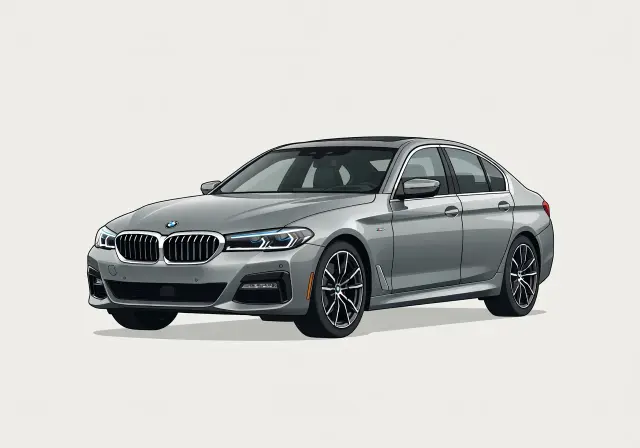
#04
2024 BMW 530 530i xDrive Sedan (M Sport)
5.60sec 0–60
14.30s ¼ mi @ 96.0 mph
▾
- 0–60 mph
- 5.60 sec
- ¼ Mile ET
- 14.30 sec
- Trap Speed
- 96.0 mph
- Engine
- 2.0L Turbo I-4 + Elec
- Drivetrain
- AWD
- Transmission
- 8A
- Horsepower
- 255 hp
- Torque
- 295 lb-ft
- Curb Weight
- 4,000 lbs
- Power-to-Weight
- 15.7 lbs/hp
- MPG EPA
- 27 C / 35 H
- Production Vehicle
- Body Type
- Sedan
- Powertrain
- Hybrid
- Test Source
- Motor Trend
- Overall Rank
- #4 of 20 production runs
#05
2024 BMW 530 530i xDrive Sedan (M Sport)
6.00sec 0–60
14.40s ¼ mi @ 97.0 mph
▾
- 0–60 mph
- 6.00 sec
- ¼ Mile ET
- 14.40 sec
- Trap Speed
- 97.0 mph
- Engine
- 2.0L Turbo I-4 + Elec
- Drivetrain
- AWD
- Transmission
- 8A
- Horsepower
- 255 hp
- Torque
- 295 lb-ft
- Curb Weight
- 4,000 lbs
- Power-to-Weight
- 15.7 lbs/hp
- MPG EPA
- 27 C / 35 H / 31.2 Obs
- Production Vehicle
- Body Type
- Sedan
- Powertrain
- Hybrid
- Test Source
- MotorWeek
- Overall Rank
- #5 of 20 production runs
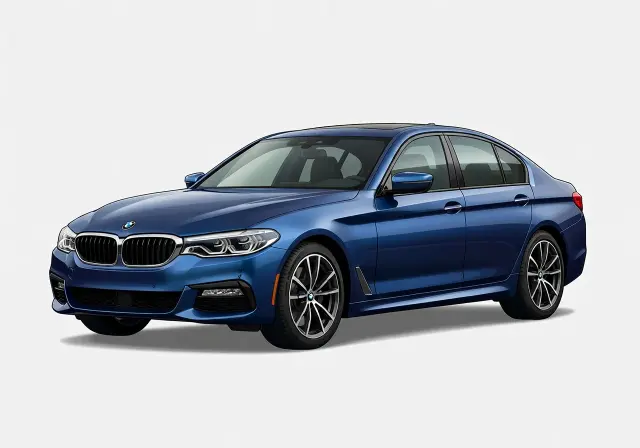
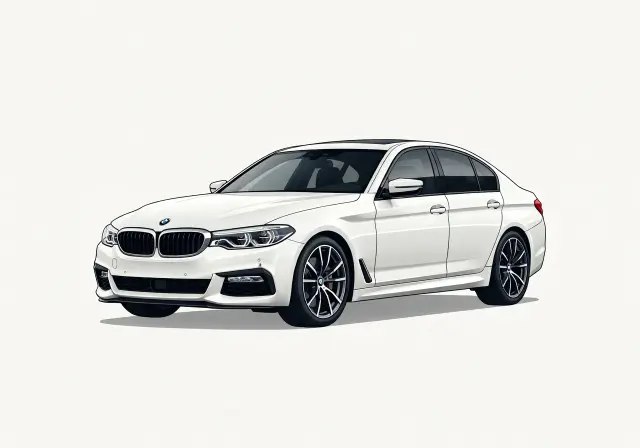
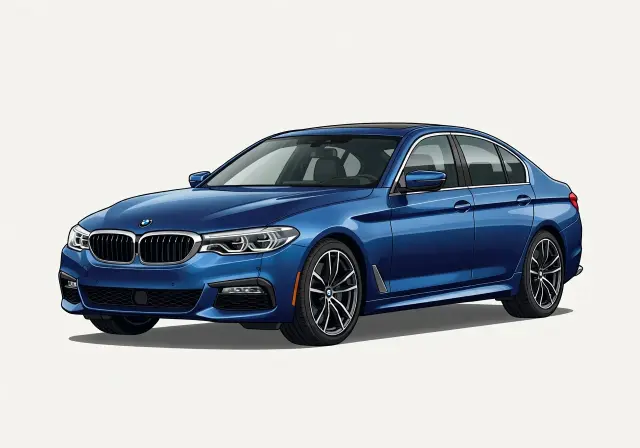
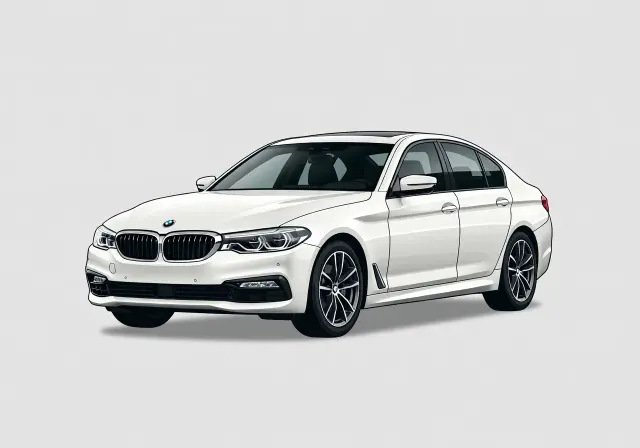
How we verify BMW 530 performance data
Records and averages on this page cover verified production runs only; modified and prototype results are listed by year but never folded into them. We include only independently published road-test results from automotive publications. Manufacturer-claimed 0–60 times are excluded unless clearly labeled. When multiple publications test the same BMW 530 trim, each run is listed separately — weather, tires, surface, rollout, and instrumentation all affect results.
04 /
BMW 530 0–60 and quarter-mile distribution
0–60 vs ¼ mile · lower-left is fasterEach dot is a verified production test run
0–60 → ¼ mile →
Fastest Recorded run Slowest
05 /
BMW 530 performance FAQs
10 questions The 2024 BMW 530 runs from 0-60 mph in 5.5 to 6.0 seconds across four verified tests. The quickest results are 5.5 seconds for both the 530i Sedan (M Sport) and 530i xDrive Sedan (M Sport). Quarter-mile times range from 14.1 to 14.4 seconds, with trap speeds from 96 to 98.6 mph.
The fastest BMW 530 on record is the 2021 530e Sedan (M Sport), which reaches 60 mph in 5.2 seconds. It is also the quickest quarter-mile car in the lineup, running 13.8 seconds at 100 mph. Across all 20 BMW 530 tests, the average 0-60 time is 6.59 seconds.
The fastest stock BMW 530 is also the overall quickest one on record: the 2021 530e Sedan (M Sport) at 5.2 seconds from 0-60 mph. Its quarter-mile time is 13.8 seconds at 100 mph. All 20 recorded BMW 530 tests are production vehicles, so there is no modified result ahead of it.
The 2024 BMW 530i Sedan (M Sport) reaches 60 mph in 5.5 seconds. In the quarter-mile, it runs 14.1 seconds at 98.6 mph. This rear-wheel-drive version uses a 255-hp, 295-lb-ft B48 hybrid powertrain and is tied for the quickest 0-60 result among 2024 BMW 530 models.
The 2024 BMW 530i xDrive Sedan (M Sport) has posted 0-60 times of 5.5, 5.6, and 6.0 seconds across three tests. Its quarter-mile results range from 14.2 to 14.4 seconds, with trap speeds of 96 to 97 mph. Like the rear-drive car, it makes 255 hp and 295 lb-ft.
For 2024 models, the 530i Sedan (M Sport) and 530i xDrive Sedan (M Sport) are effectively even at their best, with both recording 5.5 seconds to 60 mph. The rear-drive 530i has the quicker quarter-mile result, though, at 14.1 seconds versus the xDrive car's 14.2 to 14.4 seconds.
The G60-generation BMW 530, introduced for 2024, averages 5.65 seconds from 0-60 mph across four tests. Its quickest run is 5.5 seconds, recorded by the 2024 530i Sedan (M Sport). All G60 530s on record use a hybrid powertrain, with output listed at 255 hp in current tests.
The G30 BMW 530, sold from 2017 to 2023, averages 5.99 seconds from 0-60 mph across seven tests. The quickest G30 result is 5.2 seconds from the 2021 530e Sedan (M Sport). Powertrains in this generation include both gasoline and plug-in hybrid versions, with outputs ranging from 248 to 288 hp.
The fastest E60 BMW 530 is the 2004 530i Sedan (Sport), which reaches 60 mph in 6.7 seconds. Across six E60 tests, the generation averages 7.12 seconds to 60 mph. E60 530 models were naturally aspirated gasoline cars, with power ranging from 225 to 255 hp.
The quickest quarter-mile BMW 530 on record is the 2021 530e Sedan (M Sport) at 13.8 seconds with a 100 mph trap speed. For the 2024 lineup, the best quarter-mile belongs to the 530i Sedan (M Sport) at 14.1 seconds and 98.6 mph. Across all 20 tests, the average quarter-mile is 14.99 seconds at 94.2 mph.
Sources
Car and Driver
Motor Trend
MotorWeek
0–60 and quarter-mile times vary with driver, weather, tire temperature, and wear. We collect every verified run we can find — so you see the range of what a BMW 530 can do, not a single marketing claim.
06 /
Other BMW 0–60 times
07 /
Are we missing a performance test for BMW 530?
Log in to suggest a missing test.