
Lexus NX 0–60 Times
The Lexus NX 0–60 times and quarter-mile times below are from 17 recorded performance tests sourced from reputable automotive resources such as Car and Driver, Motor Trend and MotorWeek and more.
The fastest tested Lexus NX is the 2022 Lexus NX NX 450h+ F Sport PHEV, which went from 0 to 60 mph in 5.50 seconds, reaching the ¼ mile in 14.10 seconds at 99.4 mph, according to Motor Trend.
The slowest tested Lexus NX is the 2016 Lexus NX NX 300h Hybrid, which took 8.80 seconds to reach 60 mph, running the ¼ mile in 16.80 seconds at 84.0 mph, according to Car and Driver.
Out of all the Lexus NX tests in our database, the average 0–60 mph time is 7.28 seconds. The average quarter-mile time is 15.56 seconds at 90.22 mph.
Fastest 0–60
5.50sec
2022 NX 450h+ F Sport PHEV · stock
Average 0–60
7.28sec
Across 17 runs
Avg ¼ Mile
15.56sec
@ 90.2 mph trap
Slowest 0–60
8.80sec
2016 NX 300h
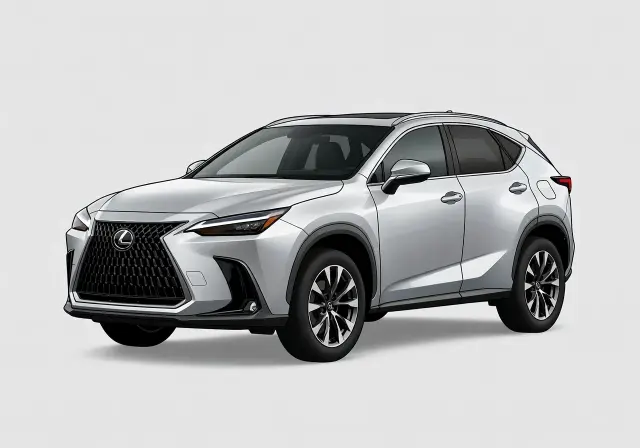
Across 17 verified runs, the Lexus NX ranges from 5.50 to 8.80 seconds 0–60, with a 7.28-second average.
The Lexus NX is ranked in these lists
01 /
Lexus NX Performance Overview
Lexus’s compact NX performance record spans 2015 to 2023, with 17 independently verified tests charting its move from early turbo and hybrid setups to a broader mix of gasoline, hybrid, and plug-in hybrid drivetrains. The first-generation AZ10 (2015–2021) used the 194–235 hp 8AR-FTS turbo-four and 2AR-FXE hybrid system, establishing the model’s baseline with the 2015 NX 200t F Sport at 6.9 seconds to 60 mph, while the 2016 NX 300h Hybrid marked the slow end of the range at 8.8 seconds.
Through the late AZ10 years, outright pace changed little, with the 2018 NX 300 again posting 6.9 seconds to 60 mph as the generation’s quickest verified result. The larger shift came with the AZ20 generation for 2022, which moved to the 239–302 hp T24A-FTS and A25A-FXS family and expanded the lineup beyond conventional hybridization. In this era, the NX 350 F Sport Handling reached 60 mph in 6.4 seconds, while the NX 350h Luxury Hybrid cut that to 6.2.
Today, the NX sits in its quickest form as the plug-in hybrid NX 450h+ F Sport PHEV, delivering the model’s best figures at 5.5 seconds to 60 mph and a class-leading-for-this-nameplate 14.1 seconds in the quarter-mile at 99 mph, setting the current AZ20 benchmark.
02 /
Lexus NX 0–60 Times by Generation: AZ10 to AZ20
2 generations| Generation | Years | Avg 0–60 | Fastest 0–60 | Tests | Notes |
|---|---|---|---|---|---|
| AZ20 | 2022–present | 6.74s | 5.50s — 2022 NX 450h+ F Sport PHEV | 8 | The AZ20 generation (2022–present) averaged 6.74 seconds to 60 mph across 8 tests, led by the 2022 NX 450h+ F Sport PHEV at 5.50 seconds. Output ranged from 239 to 302 hp across 2.4L Turbo I-4, 2.5L I-4 + Elec, 2.5L I-4 + Elec 18.1-kWh configurations. |
| AZ10 | 2015–2021 | 7.76s | 6.90s — 2018 NX 300 | 9 | The AZ10 generation (2015–2021) averaged 7.76 seconds to 60 mph across 9 tests, led by the 2018 NX 300 at 6.90 seconds. Output ranged from 194 to 235 hp across 2.0L Turbo I-4, 2.5L I-4 + Elec, 2.5L I-4 + Elec 1.6-kWh configurations. |
AZ20
2022–present
Avg 0–60
6.74s
Fastest
5.50s
Tests
8
2022 NX 450h+ F Sport PHEV
The AZ20 generation (2022–present) averaged 6.74 seconds to 60 mph across 8 tests, led by the 2022 NX 450h+ F Sport PHEV at 5.50 seconds. Output ranged from 239 to 302 hp across 2.4L Turbo I-4, 2.5L I-4 + Elec, 2.5L I-4 + Elec 18.1-kWh configurations.
AZ10
2015–2021
Avg 0–60
7.76s
Fastest
6.90s
Tests
9
2018 NX 300
The AZ10 generation (2015–2021) averaged 7.76 seconds to 60 mph across 9 tests, led by the 2018 NX 300 at 6.90 seconds. Output ranged from 194 to 235 hp across 2.0L Turbo I-4, 2.5L I-4 + Elec, 2.5L I-4 + Elec 1.6-kWh configurations.
03 /
Lexus NX 0–60 Times by Year and Trim
17 tests · 6 years
▾
2023 Lexus NX
1 verified run
Avg 0–60
7.20
sec
Avg ¼ Mile
15.40
sec
Recorded Tests
1
#10
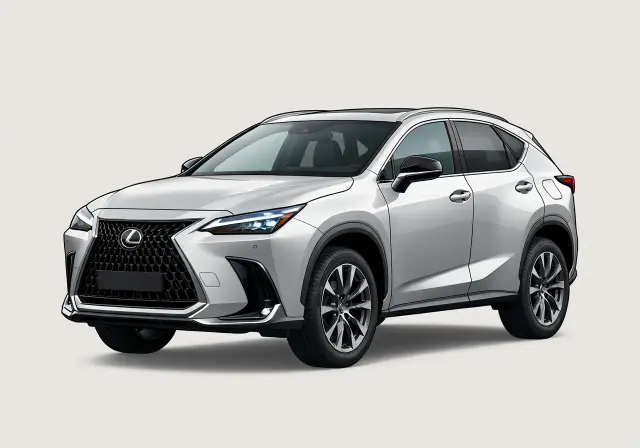
2023 Lexus NX NX 350
7.20sec 0–60
0.0s · 0mph
0.0s · 0mph
15.40s
¼ mi @ 92.7 mph
▾
- 0–60 mph
- 7.20 sec
- ¼ Mile ET
- 15.40 sec
- Trap Speed
- 92.7 mph
- Engine
- 2.4L Turbo I-4
- Drivetrain
- AWD
- Transmission
- 8A
- Horsepower
- 275 hp
- Torque
- 317 lb-ft
- Curb Weight
- 4,095 lbs
- Power-to-Weight
- 14.9 lbs/hp
- MPG EPA
- 22 C / 29 H
- Production Vehicle
- Body Type
- Crossover
- Powertrain
- Gasoline
- Test Source
- Motor Trend
- Overall Rank
- #10 of 17
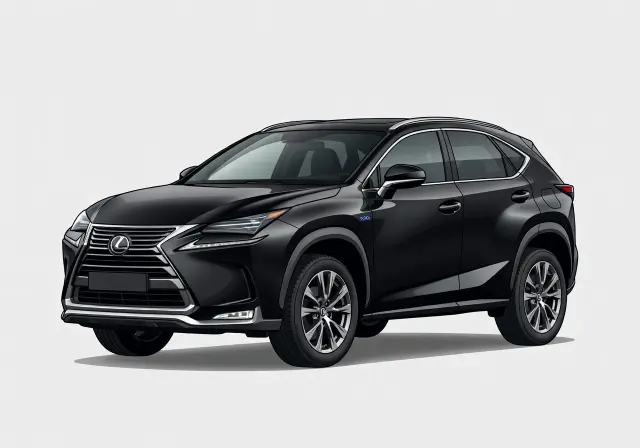
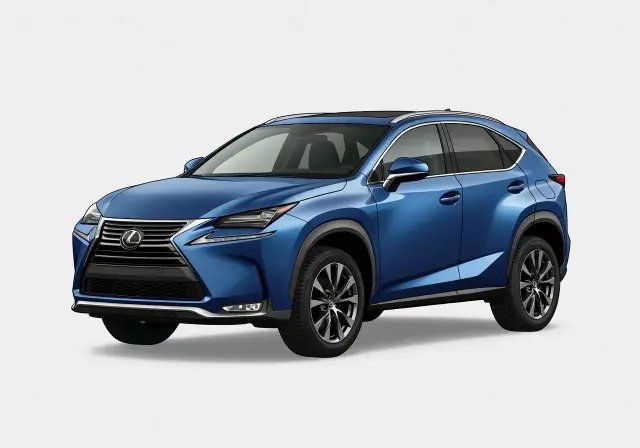
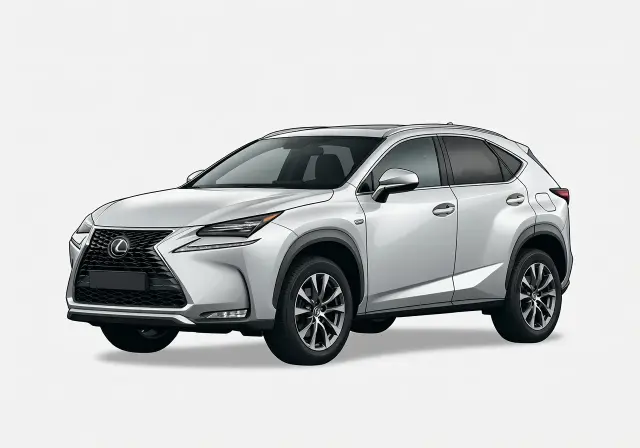
How we verify Lexus NX performance data
We include only independently published road-test results from automotive publications. Manufacturer-claimed 0–60 times are excluded unless clearly labeled. When multiple publications test the same Lexus NX trim, each run is listed separately — weather, tires, surface, rollout, and instrumentation all affect results.
04 /
Lexus NX 0–60 and quarter-mile distribution
0–60 vs ¼ mile · lower-left is fasterEach dot is a recorded test run
0–60 →
¼ mile →
Fastest
Recorded run
Slowest
05 /
Lexus NX performance FAQs
10 questions
The 2023 Lexus NX 350 reaches 60 mph in 7.2 seconds. In the same test, it ran the quarter-mile in 15.4 seconds at 92.7 mph. That result came from a stock AWD model with the 275-hp, 317-lb-ft turbocharged 2.4-liter T24A-FTS engine.
For the 2023 model year, the Lexus NX is on record at 7.2 seconds from 0-60 mph in NX 350 form. Across all 17 verified Lexus NX tests, the model averages 7.28 seconds to 60 mph and 15.56 seconds in the quarter-mile at 90.2 mph.
The fastest Lexus NX on record is the 2022 NX 450h+ F Sport PHEV, which reaches 60 mph in 5.5 seconds. It is also the quickest NX in the quarter-mile, posting 14.1 seconds at 99 mph. That makes it the quickest-performing NX variant tested so far.
The fastest stock Lexus NX is also the overall fastest one tested: the 2022 NX 450h+ F Sport PHEV. It recorded a 0-60 mph time of 5.5 seconds and a 14.1-second quarter-mile at 99 mph. All 17 Lexus NX tests on record are production vehicles, with no modified examples included.
The second-generation Lexus NX, code AZ20, averages 6.74 seconds from 0-60 mph across 8 tests. Its quickest run is 5.5 seconds, set by the 2022 NX 450h+ F Sport PHEV. AZ20 models span 2022 onward and include gasoline, hybrid, and plug-in hybrid powertrains.
The first-generation Lexus NX, code AZ10, averages 7.76 seconds from 0-60 mph across 9 tests. The quickest AZ10 example is the 2018 NX 300 at 6.9 seconds. This generation ran from 2015 to 2021 and covered both turbocharged gasoline and hybrid versions.
The fastest first-generation Lexus NX is the 2018 NX 300, with a 0-60 mph time of 6.9 seconds. Within the AZ10 generation, that is the quickest verified run. Across the full first-generation lineup, the average 0-60 time is 7.76 seconds over 9 tests.
The NX 450h+ F Sport PHEV is clearly quicker. Its best recorded 0-60 mph time is 5.5 seconds, while the 2023 NX 350 is on record at 7.2 seconds. That gives the plug-in hybrid performance model a 1.7-second advantage to 60 mph.
The NX 350 Luxury is quicker on record than the NX 350h Luxury Hybrid. The NX 350 Luxury has a best 0-60 mph time of 6.6 seconds, while the NX 350h Luxury Hybrid's best is 7.0 seconds. Their average times are 6.95 seconds and 7.3 seconds, respectively.
Across 17 Lexus NX tests, the average quarter-mile time is 15.56 seconds at 90.2 mph. The quickest quarter-mile run belongs to the 2022 NX 450h+ F Sport PHEV, which posted 14.1 seconds at 99 mph. For 2023, the NX 350 ran 15.4 seconds at 92.7 mph.
Sources
Car and Driver
Motor Trend
MotorWeek
0–60 and quarter-mile times vary with driver, weather, tire temperature, and wear. We collect every verified run we can find — so you see the range of what a Lexus NX can do, not a single marketing claim.
06 /
Used Lexus NX for Sale
Browse used Lexus NX listings on Edmunds to compare available model years, trims, mileage, prices, and vehicles for sale near you.
Sell your current car →We may earn a commission when you visit Edmunds through these links.
07 /
Other Lexus 0–60 times
08 /
Are we missing a performance test for Lexus NX?
Log in to suggest a missing test.