
Pontiac Grand Am 0–60 Times
The Pontiac Grand Am 0–60 times and quarter-mile times below are from 4 recorded performance tests sourced from reputable automotive resources such as Car and Driver and Motor Trend and more.
The fastest tested Pontiac Grand Am is the 2000 Pontiac Grand Am SC/T Coupe, which went from 0 to 60 mph in 6.60 seconds, reaching the ¼ mile in 14.90 seconds at 91.2 mph, according to Motor Trend.
The slowest tested Pontiac Grand Am is the 1980 Pontiac Grand Am Coupe, which took 11.00 seconds to reach 60 mph, running the ¼ mile in 18.10 seconds at 77.0 mph, according to Car and Driver.
Out of all the Pontiac Grand Am tests in our database, the average 0–60 mph time is 8.48 seconds. The average quarter-mile time is 16.35 seconds at 84.65 mph.
Fastest Stock 0–60
7.70sec
1999 GT Sedan
Fastest Overall
6.60sec
2000 SC/T Coupe · modified
Avg ¼ Mile
16.35sec
@ 84.7 mph trap
Slowest 0–60
11.00sec
1980 Coupe
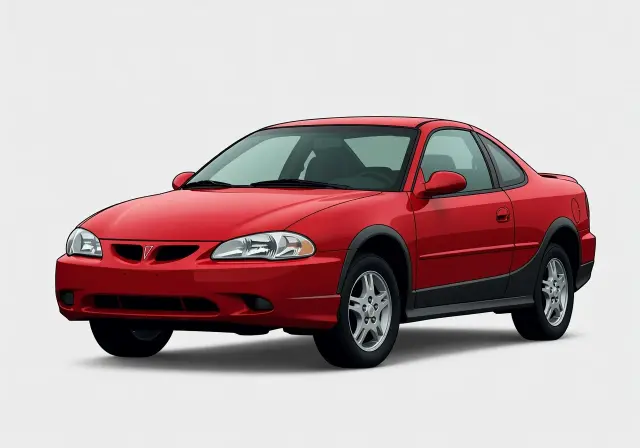
Across 4 verified runs, the Pontiac Grand Am ranges from 6.60 to 11.00 seconds 0–60, with a 8.48-second average.
01 /
Pontiac Grand Am Performance Overview
Pontiac’s Grand Am performance record in this dataset spans 1980 to 2000, with 4 verified tests covering four model years. Early results show the coupe as a modestly paced gasoline offering, with the 1980 Coupe reaching 60 mph in 11.0 seconds. After a long gap in the available tests, the fourth-generation car returned in 1996 as the SE Sedan, cutting that benchmark to 8.6 seconds. Engine data where available shows the later shift to the LD9 2.4-liter four-cylinder at 150 hp in 4th Gen form.
The largest change came with the 5th Gen (1999–2005), when the tested range moved from naturally aspirated to supercharged gasoline power. The 1999 GT Sedan dropped the 0-60 time to 7.7 seconds, then the 2000 SC/T Coupe set the model’s quickest figure at 6.6 seconds and backed it with a 14.9-second quarter-mile at 91.2 mph. Across the tested production span, output evolved from the earlier low-performance baseline to a 175–240 hp range in the final generation.
In this record, the Grand Am ends as a gasoline-only model with its strongest numbers in the supercharged 5th Gen, where the 2000 SC/T Coupe’s 6.6-second run remains the fastest result shown.
02 /
Pontiac Grand Am 0–60 Times by Generation: 4th Gen to 5th Gen
2 generations| Generation | Years | Avg 0–60 | Fastest 0–60 | Tests | Notes |
|---|---|---|---|---|---|
| 5th Gen | 1999–2005 | 7.15s | 6.60s — 2000 SC/T Coupe | 2 | The 5th Gen generation (1999–2005) averaged 7.15 seconds to 60 mph across 2 tests, led by the 2000 SC/T Coupe at 6.60 seconds. Output ranged from 175 to 240 hp across 3.4L Supercharger V6, 3.4L V6 configurations. Includes 1 result from 1 modified vehicle. |
| 4th Gen | 1992–1998 | 8.60s | 8.60s — 1996 SE Sedan | 1 | The 4th Gen generation (1992–1998) averaged 8.60 seconds to 60 mph across 1 tests, led by the 1996 SE Sedan at 8.60 seconds. Output was 150 hp across 2.4L I-4 configurations. |
5th Gen
1999–2005
Avg 0–60
7.15s
Fastest
6.60s
Tests
2
2000 SC/T Coupe
The 5th Gen generation (1999–2005) averaged 7.15 seconds to 60 mph across 2 tests, led by the 2000 SC/T Coupe at 6.60 seconds. Output ranged from 175 to 240 hp across 3.4L Supercharger V6, 3.4L V6 configurations. Includes 1 result from 1 modified vehicle.
4th Gen
1992–1998
Avg 0–60
8.60s
Fastest
8.60s
Tests
1
1996 SE Sedan
The 4th Gen generation (1992–1998) averaged 8.60 seconds to 60 mph across 1 tests, led by the 1996 SE Sedan at 8.60 seconds. Output was 150 hp across 2.4L I-4 configurations.
03 /
Pontiac Grand Am 0–60 Times by Year and Trim
4 tests · 4 years
▾
2000 Pontiac Grand Am
1 verified run
Avg 0–60
6.60
sec
Avg ¼ Mile
14.90
sec
Recorded Tests
1
#01
2000 Pontiac Grand Am SC/T Coupe
6.60sec 0–60
0.0s · 0mph
0.0s · 0mph
14.90s
¼ mi @ 91.2 mph
▾
- 0–60 mph
- 6.60 sec
- ¼ Mile ET
- 14.90 sec
- Trap Speed
- 91.2 mph
- Engine
- 3.4L Supercharger V6
- Drivetrain
- FWD
- Transmission
- 4A
- Horsepower
- 240 hp
- Torque
- 250 lb-ft
- Curb Weight
- 3,100 lbs
- Power-to-Weight
- 12.9 lbs/hp
- Production Vehicle
- Body Type
- Coupe
- Powertrain
- Gasoline
- Test Source
- Motor Trend
- Tuner
- GM Specialty Vehicles
- Overall Rank
- #1 of 4
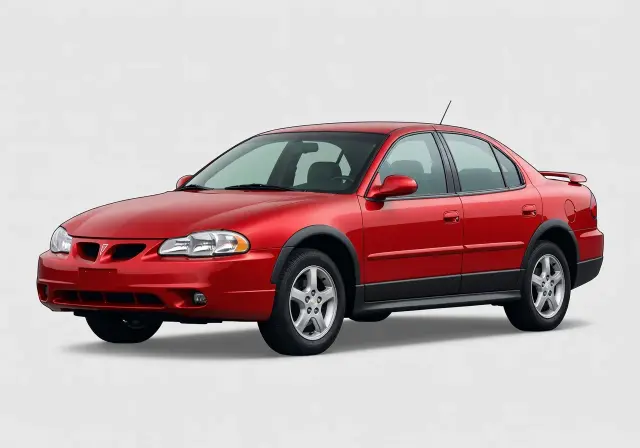
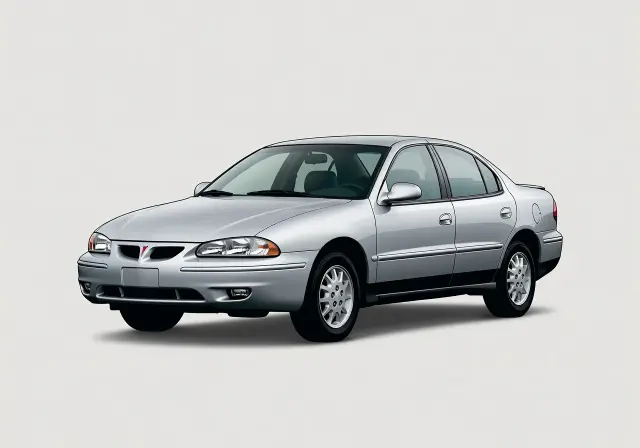
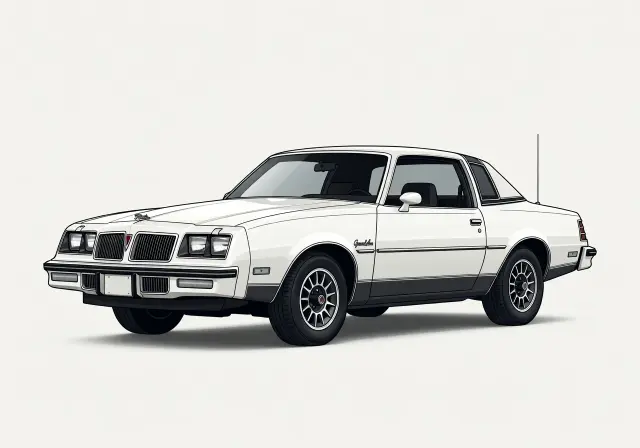
How we verify Pontiac Grand Am performance data
We include only independently published road-test results from automotive publications. Manufacturer-claimed 0–60 times are excluded unless clearly labeled. When multiple publications test the same Pontiac Grand Am trim, each run is listed separately — weather, tires, surface, rollout, and instrumentation all affect results.
04 /
Pontiac Grand Am 0–60 and quarter-mile distribution
0–60 vs ¼ mile · lower-left is fasterEach dot is a recorded test run
0–60 →
¼ mile →
Fastest
Recorded run
Slowest
05 /
Pontiac Grand Am performance FAQs
10 questions
The 2000 Pontiac Grand Am SC/T Coupe runs 0-60 mph in 6.6 seconds. It also covers the quarter-mile in 14.9 seconds at 91.2 mph. That test car made 240 hp and 250 lb-ft, used front-wheel drive, and was recorded in lightly modified form.
The quickest Grand Am on record is the 2000 SC/T Coupe at 6.6 seconds from 0-60 mph. It also holds the best quarter-mile result at 14.9 seconds with a 91.2-mph trap speed. That specific run was achieved by a lightly modified car rather than a stock production example.
The fastest stock Pontiac Grand Am on record is the 1999 GT Sedan, which reaches 60 mph in 7.7 seconds. That makes it the quickest production Grand Am in the verified runs. The overall quickest Grand Am, the 2000 SC/T Coupe at 6.6 seconds, was lightly modified.
Across 4 verified Pontiac Grand Am tests, the average 0-60 mph time is 8.48 seconds. The average quarter-mile result is 16.35 seconds at 84.7 mph. Those figures cover the full range of tested cars, from the quickest 6.6-second SC/T Coupe to the slowest 11.0-second 1980 Coupe.
The 5th Gen Pontiac Grand Am, sold from 1999 to 2005, averages 7.15 seconds from 0-60 mph across 2 recorded tests. The quickest 5th Gen is the 2000 SC/T Coupe at 6.6 seconds. Power spans 175 to 240 hp, with both naturally aspirated and supercharged gasoline setups represented.
The fastest 5th Gen Grand Am is the 2000 SC/T Coupe, recorded at 6.6 seconds from 0-60 mph. It is also the fastest Grand Am overall. That car used a supercharged 240-hp gasoline powertrain and front-wheel drive, but its quickest recorded run was in lightly modified form.
The 4th Gen Pontiac Grand Am, covering 1992 to 1998, posts an 8.6-second 0-60 mph time in verified testing. The quickest recorded example is the 1996 SE Sedan at 8.6 seconds. That generation is represented by a naturally aspirated 150-hp gasoline setup in the available runs.
The SC/T Coupe is quicker. The 2000 Grand Am SC/T Coupe reaches 60 mph in 6.6 seconds, while the 1999 Grand Am GT Sedan does it in 7.7 seconds. That gives the SC/T Coupe a 1.1-second advantage to 60 mph, though the SC/T result comes from a lightly modified car.
The Grand Am GT Sedan is the quicker of the two tested trims. The 1999 GT Sedan hits 60 mph in 7.7 seconds, while the 1996 SE Sedan takes 8.6 seconds. That puts the GT Sedan 0.9 second ahead in verified 0-60 testing.
The quickest Pontiac Grand Am quarter-mile run on record is 14.9 seconds at 91.2 mph by the 2000 SC/T Coupe. Across all 4 verified Grand Am tests, the average quarter-mile result is 16.35 seconds at 84.7 mph. The same SC/T Coupe is also the model’s quickest car to 60 mph.
Sources
Car and Driver
Motor Trend
0–60 and quarter-mile times vary with driver, weather, tire temperature, and wear. We collect every verified run we can find — so you see the range of what a Pontiac Grand Am can do, not a single marketing claim.
06 /
Used Pontiac Grand Ams for Sale
Browse used Pontiac Grand Am listings on Edmunds to compare available model years, trims, mileage, prices, and vehicles for sale near you.
Sell your current car →We may earn a commission when you visit Edmunds through these links.
07 /
Other Pontiac 0–60 times
08 /
Are we missing a performance test for Pontiac Grand Am?
Log in to suggest a missing test.