
Chevrolet Camaro vs Dodge Challenger: 0–60 and Quarter-Mile Comparison
This comparison brings together verified acceleration results for the Chevrolet Camaro and Dodge Challenger, covering 0–60 mph times, quarter-mile times, and broader acceleration comparisons across 163 Chevrolet tests and 54 Dodge tests. The recorded year ranges span 1967–2021 for the Camaro and 1970–2023 for the Challenger.
In production form, the fastest 0–60 mph result is a tie at 3.4 seconds: the 2019 Camaro ZL1 1LE Coupe and the 2018 Challenger SRT Hellcat Widebody Coupe both reach that mark. Quarter-mile performance is separate, and here the production advantage goes to the Challenger at 10.9 seconds versus the Camaro’s best 11.5. Looking at all verified results, the fastest overall 0–60 entry is the non-production, heavily modified 1998 Camaro LS1 Toy Box Drag Car at 2.3 seconds.
Median 0–60 figures across the full test sets also favor the Challenger, 4.7 seconds to the Camaro’s 5.05. The latest shared model year with verified data is 2021, which can help frame newer-era comparisons before you move into the tables for trim-by-trim times, quarter-mile results, and source-attributed test entries.
Camaro Fastest 0–60
3.40sec
2019 ZL1 1LE Coupe (Extreme Track Performance Pack)
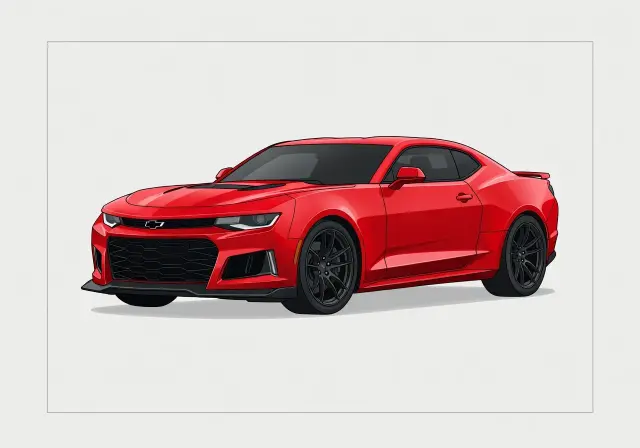
Challenger Fastest 0–60
3.40sec
2018 SRT Hellcat Widebody Coupe
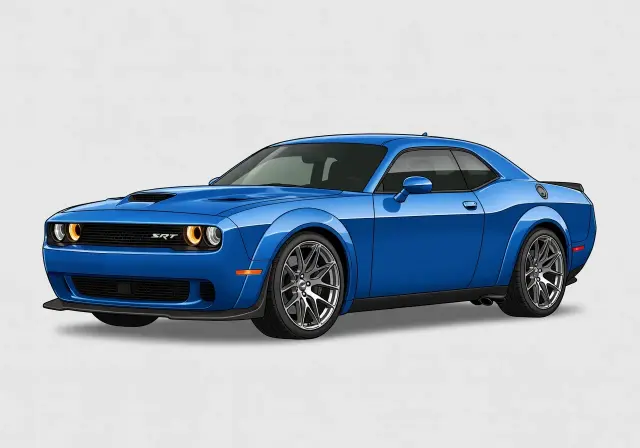
0–60 Winner
Tie
Tests in Database
217
163 + 54
01 /
Category Winners: Camaro vs Challenger
The Dodge Challenger leads 3–2 across 6 performance categories, with the Chevrolet Camaro taking 2 categories.
| Category | Chevrolet Camaro | Dodge Challenger |
|---|---|---|
| Fastest production 0–60 | 3.40s Tie | 3.40s Tie |
| Fastest production ¼ mile | 11.50s | 10.90s Winner |
| Fastest overall 0–60 | 2.30s Winner | 3.40s |
| Fastest overall ¼ mile | 10.20s Winner | 10.90s |
| Median production 0–60 | 5.05s | 4.70s Winner |
| Median production ¼ mile | 13.55s | 13.10s Winner |
| Category wins | 2 | 3 |
🏆 Overall Winner: Dodge Challenger
02 /
All-Time Production Records
Production vehicles onlyThe Chevrolet Camaro and Dodge Challenger are identically matched on production 0–60, both recording 3.40s.
Fastest Production 0–60
Camaro
3.40s
2019 · ZL1 1LE Coupe (Extreme Track Performance Pack)
Challenger
3.40s
2018 · SRT Hellcat Widebody Coupe
Identical times
Fastest Production ¼ Mile
Camaro
11.50s
2019 · 124.0 mph
Challenger
10.90s
2018 · 127.0 mph
0.60s difference
03 /
Fastest Overall Results
Includes modified and non-production vehiclesCounting all tests, the Chevrolet Camaro has been clocked at 2.30s 0–60 — 1.10s quicker than the Dodge Challenger's overall best of 3.40s.
Fastest Overall 0–60
Camaro
2.30s
1998 · LS1 Toy Box Drag Car Coupe
modified
Challenger
3.40s
2018 · SRT Hellcat Widebody Coupe
Fastest Overall ¼ Mile
Camaro
10.20s
1998 · 133.3 mph
modified
Challenger
10.90s
2018 · 127.0 mph
04 /
Typical Production Performance
Medians and averages across all production testsOn a typical production run, the Dodge Challenger reaches 60 mph in 4.70s — 0.35s quicker than the Chevrolet Camaro's median of 5.05s.
| Metric | Chevrolet Camaro | Dodge Challenger |
|---|---|---|
| Median 0–60 | 5.05s | 4.70s |
| Average 0–60 | 5.31s | 5.04s |
| Median ¼ Mile | 13.55s | 13.10s |
| Average ¼ Mile | 13.64s | 13.29s |
| Sample (0–60) | 140 | 51 |
Median is preferred over average — it is less influenced by extreme outlier tests. Averages include all production runs on record.
06 /
Latest Available Results
The most recent tested model year differs: Chevrolet Camaro (2021) vs Dodge Challenger (2023). These results are not directly comparable.
| Metric | Chevrolet Camaro | Dodge Challenger |
|---|---|---|
| Latest tested year | 2021 | 2023 |
| Best 0–60 that year |
5.60s
3LT 1LE RS Coupe |
3.60s
SRT Super Stock Coupe |
| Best ¼ mile that year | 14.20s | 11.40s |
07 /
Overlapping Model Years (1970–2021)
9 shared tested yearsRestricted to the 9 years both models overlapped (1970–2021), the Dodge Challenger held a 0.10s median 0–60 advantage over the Chevrolet Camaro.
Median 0–60 · 1970–2021 era only
Camaro
4.60s
69 production runs
Challenger
4.50s
35 production runs
08 /
Data Coverage
The Chevrolet Camaro has 163 tests spanning 1967–2021, while the Dodge Challenger has 54 tests from 1970–2023.
| Metric | Chevrolet Camaro | Dodge Challenger |
|---|---|---|
| Total tests | 163 | 54 |
| Production tests | 140 | 51 |
| Earliest tested year | 1967 | 1970 |
| Latest tested year | 2021 | 2023 |
09 /
Explore Each Model
10 /
Related Comparisons
All 0–60 and quarter-mile results are sourced from independently published road tests by reputable automotive publications. Manufacturer-claimed times are not included. When multiple publications test the same vehicle, each run is listed separately. Production and non-production results are clearly distinguished throughout. Fastest 0–60 and fastest quarter-mile records are treated as independent measurements and may come from different tests, trims, or sources.