
Jaguar E-Type 0–60 Times
The Jaguar E-Type 0–60 times and quarter-mile times below are from 7 recorded performance tests sourced from reputable automotive resources such as Car and Driver, Motor Trend and Road & Track and more.
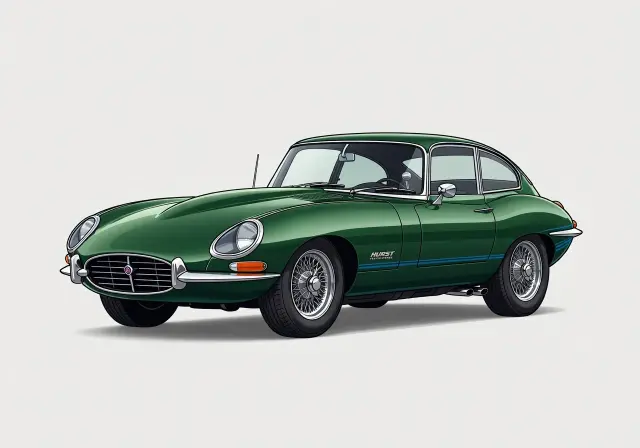
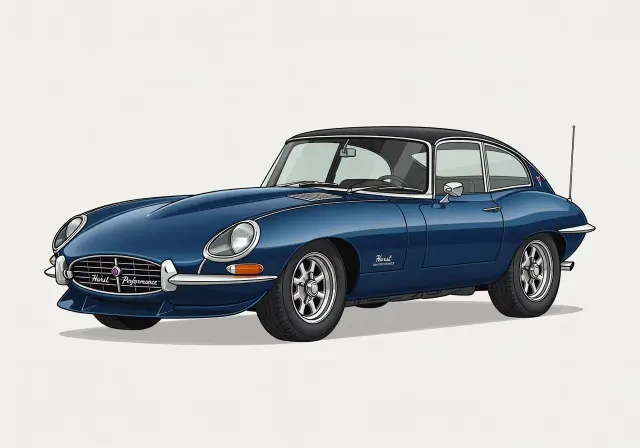
The fastest tested Jaguar E-Type is the 1967 Jaguar E-Type Hurst Performance/Pontiac Mk. II Coupe, which went from 0 to 60 mph in 5.80 seconds, reaching the ¼ mile in 14.60 seconds at 95.0 mph, according to Car and Driver.
The slowest tested Jaguar E-Type is the 1973 Jaguar E-Type V12 Series III Roadster, which took 8.00 seconds to reach 60 mph, running the ¼ mile in 16.10 seconds at 88.0 mph, according to Motor Trend.
Out of all the Jaguar E-Type tests in our database, the average 0–60 mph time is 7.14 seconds. The average quarter-mile time is 15.53 seconds at 91.33 mph.
Fastest Stock 0–60
6.30sec
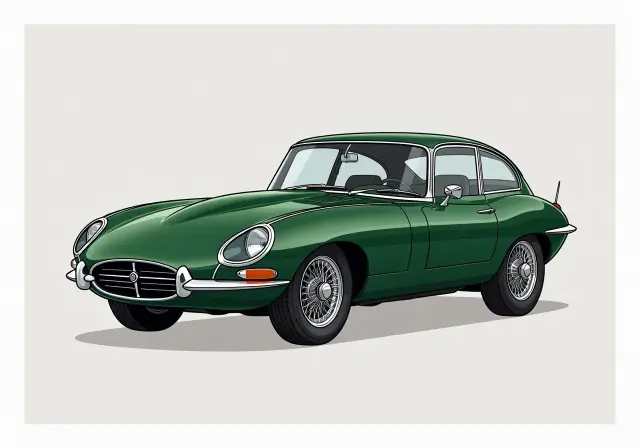
1961 3.8 Series I Roadster
Fastest Overall
5.80sec
1967 Hurst Performance/Pontiac Mk. II Coupe · modified
Avg ¼ Mile
15.53sec
@ 91.3 mph trap
Slowest 0–60
8.00sec
1973 V12 Series
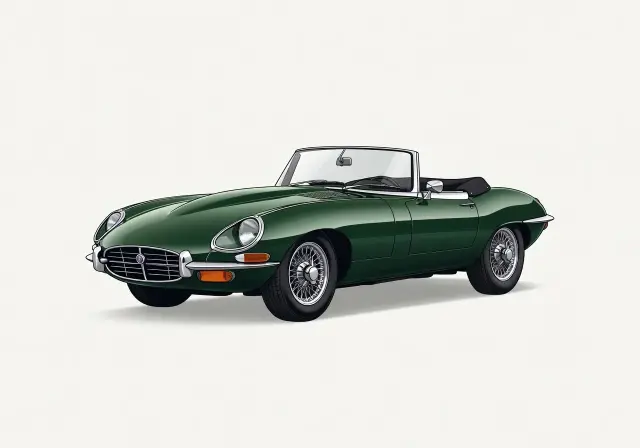
Across 7 verified runs, the Jaguar E-Type ranges from 5.80 to 8.00 seconds 0–60, with a 7.14-second average.
The Jaguar E-Type is ranked in these lists
01 /
Jaguar E-Type Performance Overview
Jaguar’s E-Type defines its performance record across 7 verified tests spanning 1961 to 1973, all from production cars. Early Series 1 models established the car’s pace with the XK-powered 3.8 and 4.2-liter naturally aspirated gasoline sixes, beginning at 265 hp. The 1961 3.8 Series I Roadster set the initial mark at 6.3 seconds to 60 mph, while a 1965 4.2 Series I Coupe recorded 6.5 seconds. The quickest result in the dataset came later in Series 1, when the 1967 Hurst Performance/Pontiac Mk. II Coupe reached 60 mph in 5.8 seconds and covered the quarter-mile in 14.6 seconds at 95 mph.
By the Series 2 years, output listed here moved to 246 hp, and the tested 1969 4.2 Series II Roadster recorded 8.0 seconds to 60 mph, showing a slower average than the earlier cars. The final Series 3 era shifted to a naturally aspirated gasoline V12 rated at 272 hp; in this dataset, both tested examples are represented by the 1973 V12 Series III Roadster at 8.0 seconds to 60 mph. As the model stands in its last production phase, the E-Type’s measured record remains entirely gasoline-powered, from the early XK six-cylinder cars to the closing V12 Series 3.
02 /
Jaguar E-Type 0–60 Times by Generation: Series 1 to Series 3
3 generations| Generation | Years | Avg 0–60 | Fastest 0–60 | Tests | Notes |
|---|---|---|---|---|---|
| Series 3 | 1971–1974 | 8.00s | 8.00s — 1973 V12 Series III Roadster | 2 | The Series 3 generation (1971–1974) averaged 8.00 seconds to 60 mph across 2 tests, led by the 1973 V12 Series III Roadster at 8.00 seconds. Output was 272 hp across 5.3L V12 configurations. |
| Series 2 | 1968–1971 | 8.00s | 8.00s — 1969 4.2 Series II Roadster | 1 | The Series 2 generation (1968–1971) averaged 8.00 seconds to 60 mph across 1 tests, led by the 1969 4.2 Series II Roadster at 8.00 seconds. Output was 246 hp across 4.2L I-6 configurations. |
| Series 1 | 1961–1968 | 6.50s | 5.80s — 1967 Hurst Performance/Pontiac Mk. II Coupe | 4 | The Series 1 generation (1961–1968) averaged 6.50 seconds to 60 mph across 4 tests, led by the 1967 Hurst Performance/Pontiac Mk. II Coupe at 5.80 seconds. Output was 265 hp across 3.8L I-6, 3.9L I-6, 4.2L I-6 configurations. Includes 2 results from 2 modified vehicles. |
Series 3
1971–1974
Avg 0–60
8.00s
Fastest
8.00s
Tests
2
1973 V12 Series III Roadster
The Series 3 generation (1971–1974) averaged 8.00 seconds to 60 mph across 2 tests, led by the 1973 V12 Series III Roadster at 8.00 seconds. Output was 272 hp across 5.3L V12 configurations.
Series 2
1968–1971
Avg 0–60
8.00s
Fastest
8.00s
Tests
1
1969 4.2 Series II Roadster
The Series 2 generation (1968–1971) averaged 8.00 seconds to 60 mph across 1 tests, led by the 1969 4.2 Series II Roadster at 8.00 seconds. Output was 246 hp across 4.2L I-6 configurations.
Series 1
1961–1968
Avg 0–60
6.50s
Fastest
5.80s
Tests
4
1967 Hurst Performance/Pontiac Mk. II Coupe
The Series 1 generation (1961–1968) averaged 6.50 seconds to 60 mph across 4 tests, led by the 1967 Hurst Performance/Pontiac Mk. II Coupe at 5.80 seconds. Output was 265 hp across 3.8L I-6, 3.9L I-6, 4.2L I-6 configurations. Includes 2 results from 2 modified vehicles.
03 /
Jaguar E-Type 0–60 Times by Year and Trim
7 tests · 5 years
▾
1973 Jaguar E-Type
1 verified run
Avg 0–60
8.00
sec
Avg ¼ Mile
16.10
sec
Recorded Tests
1
#05
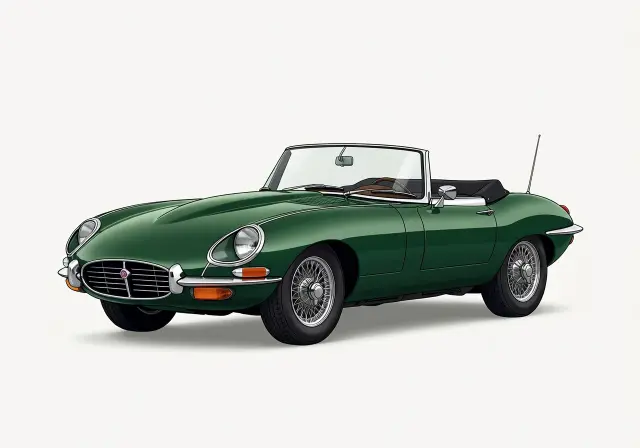
1973 Jaguar E-Type V12 Series III Roadster
8.00sec 0–60
0.0s · 0mph
0.0s · 0mph
16.10s
¼ mi @ 88.0 mph
▾
- 0–60 mph
- 8.00 sec
- ¼ Mile ET
- 16.10 sec
- Trap Speed
- 88.0 mph
- Engine
- 5.3L V12
- Drivetrain
- RWD
- Transmission
- 3A
- Horsepower
- 272 hp
- Torque
- 304 lb-ft
- Curb Weight
- 3,400 lbs
- Power-to-Weight
- 12.5 lbs/hp
- Production Vehicle
- Body Type
- Roadster
- Powertrain
- Gasoline
- Test Source
- Motor Trend
- Overall Rank
- #5 of 7
How we verify Jaguar E-Type performance data
We include only independently published road-test results from automotive publications. Manufacturer-claimed 0–60 times are excluded unless clearly labeled. When multiple publications test the same Jaguar E-Type trim, each run is listed separately — weather, tires, surface, rollout, and instrumentation all affect results.
04 /
Jaguar E-Type 0–60 and quarter-mile distribution
0–60 vs ¼ mile · lower-left is fasterEach dot is a recorded test run
0–60 →
¼ mile →
Fastest
Recorded run
Slowest
05 /
Jaguar E-Type performance FAQs
10 questions
The 1973 Jaguar E-Type V12 Series III Roadster reaches 60 mph in 8.0 seconds. Its recorded quarter-mile time is 16.1 seconds at 88 mph. That test car made 272 hp and 304 lb-ft, used rear-wheel drive, and had a curb weight of 3,400 pounds.
The quickest Jaguar E-Type on record is the 1967 Hurst Performance/Pontiac Mk. II Coupe at 5.8 seconds from 0-60 mph. It also owns the fastest quarter-mile run at 14.6 seconds at 95 mph. That car is listed as heavily modified, so it is not the fastest stock E-Type.
The fastest stock Jaguar E-Type on record is the 1961 3.8 Series I Roadster, which ran 0-60 mph in 6.3 seconds. That makes it the quickest production-spec E-Type in the verified runs, ahead of later Series II and Series III cars that recorded 8.0-second 0-60 times.
Across 7 verified Jaguar E-Type tests, the average 0-60 mph time is 7.14 seconds. The average quarter-mile is 15.53 seconds at 91.3 mph. Recorded results range from a quickest 5.8 seconds to a slowest 8.0 seconds for the run to 60 mph.
Series 1 Jaguar E-Type models average 6.5 seconds from 0-60 mph across 4 tests. The quickest Series 1 run is 5.8 seconds by the 1967 Hurst Performance/Pontiac Mk. II Coupe. For a stock Series 1 car, the benchmark is the 1961 3.8 Series I Roadster at 6.3 seconds.
The Jaguar E-Type Series 2 has a recorded 0-60 mph time of 8.0 seconds. The fastest Series 2 example on record is the 1969 4.2 Series II Roadster, also at 8.0 seconds. Across 1 verified test, that is both the average and the best result for the generation.
Series 3 Jaguar E-Type models average 8.0 seconds from 0-60 mph across 2 tests. The quickest Series 3 result is 8.0 seconds, recorded by the 1973 V12 Series III Roadster. That same 1973 car also ran the quarter-mile in 16.1 seconds at 88 mph.
Series 1 is quicker on record. Series 1 Jaguar E-Type models average 6.5 seconds from 0-60 mph, while Series 3 cars average 8.0 seconds. The fastest stock E-Type overall is also a Series 1, with the 1961 3.8 Series I Roadster posting a 6.3-second run.
There is no recorded difference in the verified runs here. The Series 2 Jaguar E-Type posts 0-60 mph in 8.0 seconds, and Series 3 models also average 8.0 seconds. The 1969 4.2 Series II Roadster and 1973 V12 Series III Roadster are both recorded at 8.0 seconds.
The fastest Jaguar E-Type quarter-mile on record is 14.6 seconds at 95 mph by the 1967 Hurst Performance/Pontiac Mk. II Coupe. Because that car is heavily modified, it does not represent the quickest stock E-Type. Across all 7 tests, the average quarter-mile is 15.53 seconds at 91.3 mph.
Sources
Car and Driver
Motor Trend
Road & Track
0–60 and quarter-mile times vary with driver, weather, tire temperature, and wear. We collect every verified run we can find — so you see the range of what a Jaguar E-Type can do, not a single marketing claim.
06 /
Used Jaguar E-Types for Sale
Browse used Jaguar E-Type listings on Edmunds to compare available model years, trims, mileage, prices, and vehicles for sale near you.
Sell your current car →We may earn a commission when you visit Edmunds through these links.
07 /
Other Jaguar 0–60 times
08 /
Are we missing a performance test for Jaguar E-Type?
Log in to suggest a missing test.