
Chevrolet Silverado 1500 vs Ford F-150: 0–60 and Quarter-Mile Comparison
This comparison looks at verified acceleration results for the Chevrolet Silverado 1500 and Ford F-150, covering 0–60 mph times, quarter-mile times, and broader test history across Chevrolet and Ford truck lineups. The page brings together 56 Silverado 1500 tests and 125 F-150 tests, with production data spanning model years 1999–2024 for the Silverado and 1993–2025 for the F-150.
In production form, the F-150 holds the quickest 0–60 mph result here at 3.6 seconds in the 2025 Raptor R SuperCrew, while the quickest production Silverado 1500 reaches 60 mph in 5.4 seconds in the 2021 RST 6.2 Crew Cab. Quarter-mile results are also separate: the fastest production F-150 runs 12.0 seconds, while the fastest production Silverado 1500 posts 13.9 seconds. The Silverado’s fastest overall 0–60 time is a non-production, heavily modified 2012 Callaway SC540 at 5.0 seconds.
Median 0–60 figures also favor the F-150, at 6.0 seconds versus 6.8 for the Silverado 1500, giving useful context beyond single standout trims. The latest shared model year with verified data is 2024, where the F-150 is the quicker truck in 0–60 testing by 3.2 seconds. Use the comparison tables below to sort individual trims, sources, and year-by-year acceleration results in more detail.
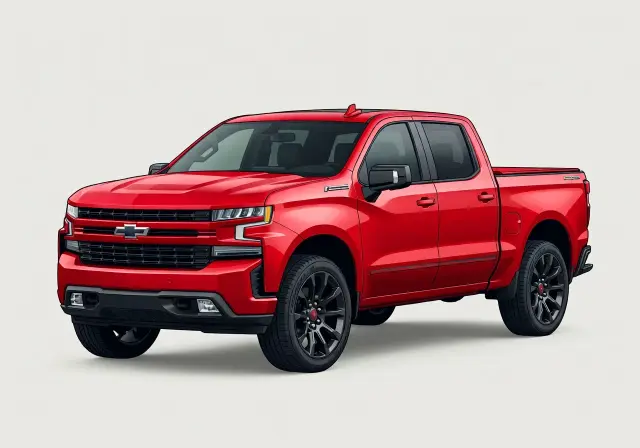
Silverado 1500 Fastest 0–60 5.40sec 2021 RST 6.2 Crew Cab (5'9.9" Bed)(Redline Edition)
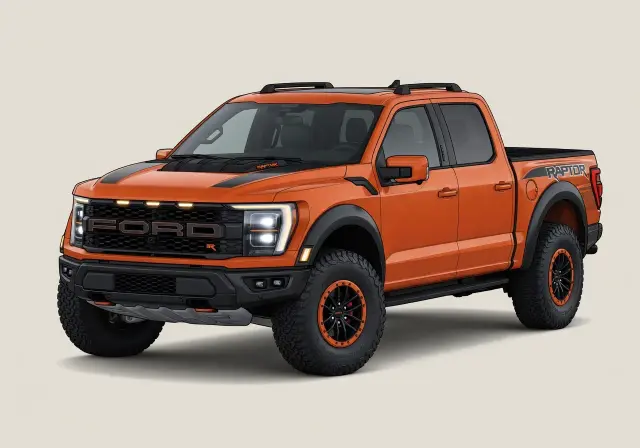
F-150 Fastest 0–60 3.60sec 2025 Raptor R SuperCrew (5'7.1" Bed)
0–60 Winner Ford F-150 (1.80s faster)
Tests in Database 181 56 + 125
01 /
Category Winners: Silverado 1500 vs F-150
The Ford F-150 leads 6–0 across 6 performance categories, with the Chevrolet Silverado 1500 taking none.
| Category | Chevrolet Silverado 1500 | Ford F-150 |
|---|---|---|
| Fastest production 0–60 | 5.40s | 3.60s Winner |
| Fastest production ¼ mile | 13.90s | 12.00s Winner |
| Fastest overall 0–60 | 5.00s | 3.60s Winner |
| Fastest overall ¼ mile | 13.40s | 12.00s Winner |
| Median production 0–60 | 6.80s | 6.00s Winner |
| Median production ¼ mile | 15.30s | 14.60s Winner |
| Category wins | 0 | 6 |
🏆 Overall Winner: Ford F-150
02 /
All-Time Production Records
Production vehicles onlyThe Ford F-150 holds the production 0–60 record at 3.60s, 1.80s quicker than the Chevrolet Silverado 1500's best of 5.40s.
Fastest Production 0–60
Silverado 1500 5.40s 2021 · RST 6.2 Crew Cab (5'9.9" Bed)(Redline Edition)
F-150 3.60s 2025 · Raptor R SuperCrew (5'7.1" Bed)
1.80s difference Fastest Production ¼ Mile
Silverado 1500 13.90s 2019 · 100.0 mph
F-150 12.00s 2024 · 113.0 mph
1.90s difference 03 /
Fastest Overall Results
Includes modified and non-production vehiclesCounting all tests, the Ford F-150 has been clocked at 3.60s 0–60 — 1.40s quicker than the Chevrolet Silverado 1500's overall best of 5.00s.
Fastest Overall 0–60
Silverado 1500 5.00s 2012 · Callaway SC540 Crew Cab (5.8 ft. Bed) modified
F-150 3.60s 2025 · Raptor R SuperCrew (5'7.1" Bed)
Fastest Overall ¼ Mile
Silverado 1500 13.40s 2012 · 103.0 mph modified
F-150 12.00s 2024 · 113.0 mph
04 /
Typical Production Performance
Medians and averages across all production testsOn a typical production run, the Ford F-150 reaches 60 mph in 6.00s — 0.80s quicker than the Chevrolet Silverado 1500's median of 6.80s.
| Metric | Chevrolet Silverado 1500 | Ford F-150 |
|---|---|---|
| Median 0–60 | 6.80s | 6.00s |
| Average 0–60 | 6.92s | 6.28s |
| Median ¼ Mile | 15.30s | 14.60s |
| Average ¼ Mile | 15.26s | 14.73s |
| Sample (0–60) | 51 | 118 |
Median is preferred over average — it is less influenced by extreme outlier tests. Averages include all production runs on record.
06 /
Latest Available Results
The most recent tested model year differs: Chevrolet Silverado 1500 (2024) vs Ford F-150 (2025). These results are not directly comparable.
| Metric | Chevrolet Silverado 1500 | Ford F-150 |
|---|---|---|
| Latest tested year | 2024 | 2025 |
| Best 0–60 that year | 6.80s ZR2 Duramax Crew Cab (5'9.9" Bed) | 3.60s Raptor R SuperCrew (5'7.1" Bed) |
| Best ¼ mile that year | 15.30s | 12.10s |
07 /
Overlapping Model Years (1999–2024)
16 shared tested yearsRestricted to the 16 years both models overlapped (1999–2024), the Ford F-150 held a 1.30s median 0–60 advantage over the Chevrolet Silverado 1500.
Median 0–60 · 1999–2024 era only
Silverado 1500 6.90s 49 production runs
F-150 5.60s 71 production runs
08 /
Data Coverage
The Chevrolet Silverado 1500 has 56 tests spanning 1999–2024, while the Ford F-150 has 125 tests from 1993–2025.
| Metric | Chevrolet Silverado 1500 | Ford F-150 |
|---|---|---|
| Total tests | 56 | 125 |
| Production tests | 51 | 118 |
| Earliest tested year | 1999 | 1993 |
| Latest tested year | 2024 | 2025 |
09 /
Explore Each Model
10 /
Related Comparisons
All 0–60 and quarter-mile results are sourced from independently published road tests by reputable automotive publications. Manufacturer-claimed times are not included. When multiple publications test the same vehicle, each run is listed separately. Production and non-production results are clearly distinguished throughout. Fastest 0–60 and fastest quarter-mile records are treated as independent measurements and may come from different tests, trims, or sources.