
Lexus GS 400 0–60 Times
The Lexus GS 400 0–60 times and quarter-mile times below are from 4 verified production tests sourced from reputable automotive resources such as Car and Driver and Motor Trend and more. A further 1 modified or prototype run is listed by year but kept out of every record and average, per our methodology.
The fastest tested production Lexus GS 400 is the 1998 Lexus GS 400 Sedan, which went from 0 to 60 mph in 5.70 seconds, reaching the ¼ mile in 14.30 seconds at 98.2 mph, according to Motor Trend.
The slowest tested production Lexus GS 400 is the 1998 Lexus GS 400 Sedan, which took 6.20 seconds to reach 60 mph, running the ¼ mile in 14.80 seconds at 97.0 mph, according to Car and Driver.
Across the 4 verified production tests of the Lexus GS 400, the average 0–60 mph time is 5.90 seconds. The average quarter-mile time is 14.45 seconds at 98.00 mph.
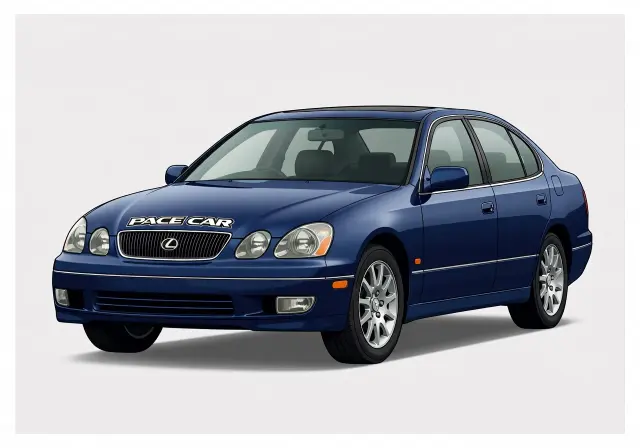
Separately, 1 modified or prototype run is on record for the Lexus GS 400, led by the 1998 Lexus GS 400 Pace Car Sedan at 5.90 seconds. These are not stock configurations and are excluded from the figures above.
Fastest 0–60 5.70sec 1998 Sedan · stock
Average 0–60 5.90sec Across 4 production runs
Fastest Modified 5.90sec 1998 Pace Car Sedan · modified
Avg ¼ Mile 14.45sec @ 98.0 mph trap
Slowest 0–60 6.20sec 1998 Sedan
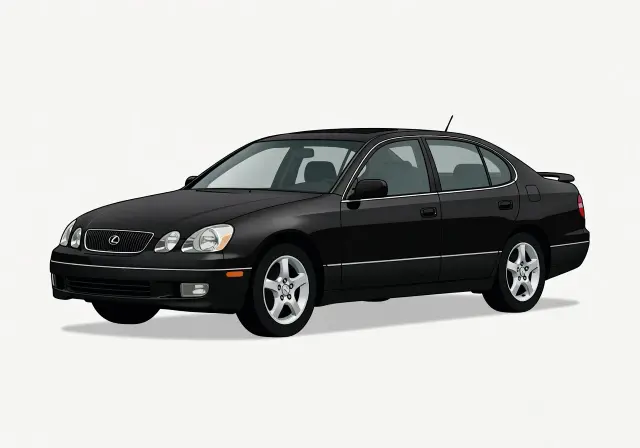
Across 4 verified production runs, the Lexus GS 400 ranges from 5.70 to 6.20 seconds 0–60, with a 5.90-second average. 1 modified or prototype run is recorded separately and excluded from this range.
The Lexus GS 400 is ranked in these lists
01 /
Lexus GS 400 Performance Overview
Positioned as the V8 performance version of the GS line, the Lexus GS 400 was produced from 1998 to 1999 and is represented here across 5 verified tests. All recorded examples fall within the S160 second generation, where performance came from Toyota’s 1UZ-FE, a naturally aspirated 4.0-liter V8 rated at 300 hp and paired exclusively with a gasoline powertrain. From its first recorded tests in 1998, the car established a narrow but consistently quick band, with 0-60 results ranging from 6.2 seconds in a 1998 Sedan to the early benchmark of 5.7 seconds in a 1998 Sedan.
That same 1998 Sedan also produced the model’s quickest quarter-mile at 14.3 seconds at 98.2 mph, while the full set averages 5.9 seconds to 60 mph and 14.44 seconds in the quarter-mile at 98.2 mph. Tested trims included the standard Sedan and Pace Car Sedan, but the data shows little spread between runs, indicating that the GS 400’s performance identity remained centered on a single formula: a 300-hp naturally aspirated V8 in the S160 chassis. Within the years covered here, it stands today as a tightly defined late-1990s gasoline sport sedan with a best recorded 0-60 of 5.7 seconds.
02 /
Lexus GS 400 0–60 Times by Generation
1 generation| Generation | Years | Avg 0–60 | Fastest 0–60 | Production Tests | Notes |
|---|---|---|---|---|---|
| S160 | 1998–2000 | 5.90s | 5.70s — 1998 Sedan | 4 | The S160 generation (1998–2000) averaged 5.90 seconds to 60 mph across 4 production tests, led by the 1998 Sedan at 5.70 seconds. Output was 300 hp across 4.0L V8 configurations. A further 1 result from 1 modified vehicle is recorded but excluded from the average. |
S160 1998–2000
Avg 0–60 5.90s
Fastest 5.70s
Tests 4
1998 Sedan
The S160 generation (1998–2000) averaged 5.90 seconds to 60 mph across 4 production tests, led by the 1998 Sedan at 5.70 seconds. Output was 300 hp across 4.0L V8 configurations. A further 1 result from 1 modified vehicle is recorded but excluded from the average.
03 /
Lexus GS 400 0–60 Times by Year and Trim
4 production tests + 1 modified · 2 years ▾
1999 Lexus GS 400
1 production run Avg 0–60 5.90 sec
Avg ¼ Mile 14.40 sec
Production Tests 1
#03
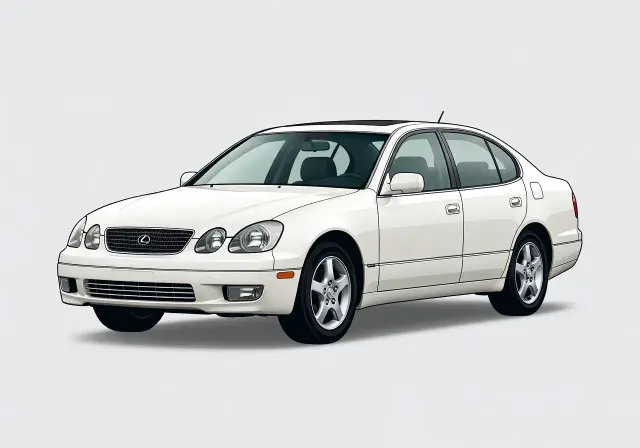
1999 Lexus GS 400 Sedan
5.90sec 0–60
14.40s ¼ mi @ 97.9 mph
▾
- 0–60 mph
- 5.90 sec
- ¼ Mile ET
- 14.40 sec
- Trap Speed
- 97.9 mph
- Engine
- 4.0L V8
- Drivetrain
- RWD
- Transmission
- 5A
- Horsepower
- 300 hp
- Torque
- 310 lb-ft
- Curb Weight
- 3,770 lbs
- Power-to-Weight
- 12.6 lbs/hp
- MPG EPA
- 16 C / 22 H
- Production Vehicle
- Body Type
- Sedan
- Powertrain
- Gasoline
- Test Source
- Motor Trend
- Overall Rank
- #3 of 4 production runs
How we verify Lexus GS 400 performance data
Records and averages on this page cover verified production runs only; modified and prototype results are listed by year but never folded into them. We include only independently published road-test results from automotive publications. Manufacturer-claimed 0–60 times are excluded unless clearly labeled. When multiple publications test the same Lexus GS 400 trim, each run is listed separately — weather, tires, surface, rollout, and instrumentation all affect results.
04 /
Lexus GS 400 0–60 and quarter-mile distribution
0–60 vs ¼ mile · lower-left is fasterEach dot is a verified production test run
0–60 → ¼ mile →
Fastest Recorded run Slowest
05 /
Lexus GS 400 performance FAQs
10 questions The 1999 Lexus GS 400 does 0-60 mph in 5.9 seconds. A recorded 1999 Sedan test also ran the quarter-mile in 14.4 seconds at 97.9 mph. That car used a 300-hp, 310-lb-ft 1UZ-FE V8, rear-wheel drive, and had a curb weight of 3,770 pounds.
The quickest Lexus GS 400 on record is a 1998 Sedan, which reached 60 mph in 5.7 seconds. Across all 5 verified GS 400 tests, the model averages 5.9 seconds to 60 mph. The fastest quarter-mile result is 14.3 seconds at 98.2 mph, also from a 1998 Sedan.
The fastest stock Lexus GS 400 is the 1998 Sedan at 5.7 seconds from 0-60 mph. All 5 GS 400 tests on record are production cars, so the stock and overall rankings are the same here. The quickest quarter-mile for a stock GS 400 is 14.3 seconds at 98.2 mph.
Across 5 verified Lexus GS 400 tests, the average 0-60 mph time is 5.9 seconds. Average quarter-mile performance is 14.44 seconds at 98.2 mph. Recorded runs range from a quickest 5.7-second 0-60 to a slowest 6.2-second pass, giving a solid picture of real-world GS 400 performance.
The S160 Lexus GS 400, sold from 1998 to 2000, averages 5.9 seconds from 0-60 mph across 5 tests. The fastest S160 run is 5.7 seconds by a 1998 Sedan. Every recorded S160 GS 400 uses a naturally aspirated gasoline powertrain, with output listed at 300 hp.
The quickest S160-generation Lexus GS 400 is the 1998 Sedan at 5.7 seconds from 0-60 mph. That same generation posts a 5.9-second average across 5 runs. Since the GS 400 only appears in the S160 generation here, that result also stands as the fastest GS 400 overall and fastest stock example.
The 1998-2000 Lexus GS 400 covers 0-60 mph in an average of 5.9 seconds across 5 tests. The best result from that span is 5.7 seconds, while the slowest is 6.2 seconds. Quarter-mile times average 14.44 seconds, with the quickest recorded pass at 14.3 seconds and 98.2 mph.
The regular Lexus GS 400 Sedan is quicker on record. Across 4 tests, the Sedan averages 5.9 seconds from 0-60 mph and has a best run of 5.7 seconds. The Pace Car Sedan appears once and recorded 5.9 seconds. That makes the standard Sedan the quicker trim when comparing best recorded runs.
No. The 1999 Lexus GS 400 Sedan is recorded at 5.9 seconds from 0-60 mph, while the quickest 1998 Sedan reached 60 mph in 5.7 seconds. The gap is small at 0.2 second, but the 1998 car is the fastest GS 400 year on record.
The Lexus GS 400 averages 14.44 seconds in the quarter-mile at 98.2 mph across 5 tests. The quickest recorded run is 14.3 seconds at 98.2 mph by a 1998 Sedan. For the 1999 model specifically, the recorded quarter-mile result is 14.4 seconds at 97.9 mph.
Sources
Car and Driver
Motor Trend
0–60 and quarter-mile times vary with driver, weather, tire temperature, and wear. We collect every verified run we can find — so you see the range of what a Lexus GS 400 can do, not a single marketing claim.
06 /
Other Lexus 0–60 times
07 /
Are we missing a performance test for Lexus GS 400?
Log in to suggest a missing test.